How to Write a Primary Source Analysis: A Step-by-Step Guide for Students
How to Write a Primary Source Analysis: A Step-by-Step Guide for Students You might be surprised to learn that a historian's most important task involves analyzing primary sources. Learning to analyze these sources gives us the most authentic way to understand past events through firsthand accounts. Primary sources serve as the foundation for building historical […]
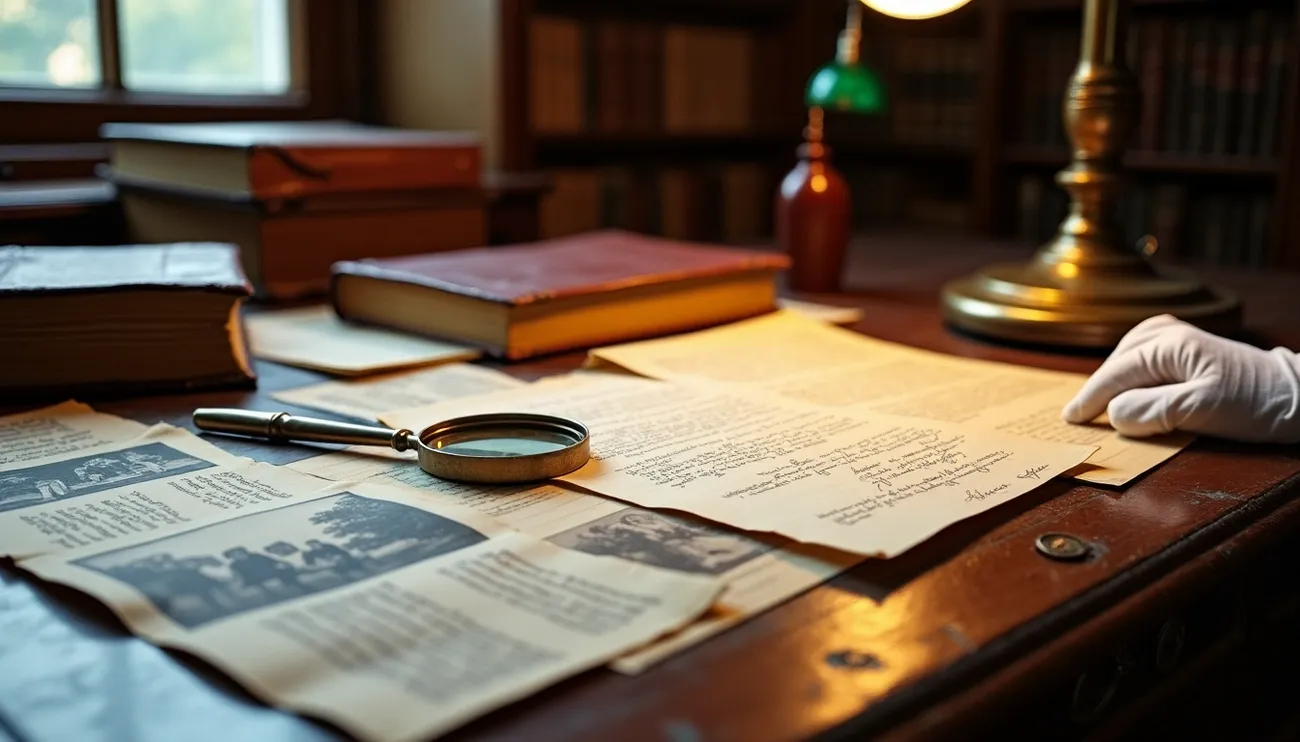
Key Takeaways
- Primary sources are original documents or objects created during the time period being studied or immediately after.
- Before analyzing a source's content, establish its context.
- Once you've understood the source's literal content, evaluate its reliability and perspective.
- Your analysis essay should move beyond summary into interpretation, exploring what sources reveal about the past and how historians construct knowledge from evidence.
- Treating sources as objective truth is the most fundamental error.
How to Write a Primary Source Analysis: A Step-by-Step Guide for Students
Navigating IB IB can feel overwhelming, especially if it's your first time. If you'd like personalised guidance from someone who's helped hundreds of IB students, our tutors are here to help. Tell us what you need → (This guide has been with the latest 2025 insights.)
Frequently Asked Questions
What is the IB Diploma Programme?
The International Baccalaureate Diploma Programme is a two-year educational framework for students aged 16-19. It includes six subject groups, the core components (TOK, Extended Essay, CAS), and emphasizes critical thinking, research skills, and international-mindedness.
How is the IB Diploma scored?
The IB Diploma is scored out of 45 points: up to 7 points each in six subjects (maximum 42) plus up to 3 bonus points from the TOK essay and Extended Essay. A minimum of 24 points is required to receive the diploma.
What are the benefits of the IB programme?
The IB develops critical thinking, research skills, time management, and international perspectives. Universities worldwide recognize the IB Diploma, and studies show IB students often perform well in higher education due to the programme's rigorous preparation.
How do I manage the IB workload?
Create a balanced study schedule, use planning tools, prioritize tasks by deadline and importance, and break large assignments into smaller steps. Regular review prevents last-minute cramming and reduces stress.
A historian's most important task doesn't involve memorizing dates or compiling timelines. It involves analyzing primary sources—the raw documents, artifacts, and records that historians use to construct understanding of the past. When you learn to analyze primary sources effectively, you're not just mastering a school skill; you're developing the core competency of historical thinking. Letters, journals, government documents, photographs, artwork, legislation, maps, and oral histories all represent human moments frozen in time, offering insights that no secondary source can fully capture.
What Counts as a Primary Source?
Primary sources are original documents or objects created during the time period being studied or immediately after. Understanding the diversity of primary sources helps you recognize them and extract their full analytical value.
Written documents include letters and correspondence that reveal personal perspectives, diaries offering intimate records of daily life and thoughts, government documents like laws and policy papers showing official positions, newspapers and periodicals capturing contemporary commentary, and literary works that provide cultural context. A love letter between two historical figures reveals not just personal relationships but period attitudes toward gender, family, and emotion.
Official records encompass legislation, administrative documents, court records, census data, and diplomatic correspondence. These sources show institutional power structures and how societies organized themselves. Census records reveal assumptions about how populations should be categorized and counted. Court records document legal disputes and social norms enforced through law.
Visual sources include photographs, paintings, sculpture, architecture, and decorative arts. A photograph from a protest documents not just the event but the presence of cameras, the moment photographers chose to capture, and the appearance of participants. Paintings reveal aesthetic values and sometimes propagandistic intentions. Architecture demonstrates engineering capabilities, aesthetic preferences, and resource distribution.
Artifacts and material culture range from tools and clothing to coins and pottery. These sources tell us about daily life, trade, technology, and cultural values in ways written documents sometimes don't. A piece of pottery reveals manufacturing techniques, aesthetic preferences, trade networks, and resource availability.
Oral histories are recorded interviews with people who experienced significant events. While created retrospectively, they offer subjective perspectives on lived experience. They're particularly valuable for recent history and for voices often excluded from written records.
Find your English Literature tutor →
Step 1 — Identify and Contextualize the Source
Before analyzing a source's content, establish its context. This foundational work shapes everything that follows. Ask yourself: Who created this source, and what was their position, role, or perspective? An official government document reveals official ideology; a private diary reveals personal beliefs that might contradict official narratives.
Determine when it was created. Is it contemporary to events it describes, or retrospective? A newspaper article written during an event has different reliability than a memoir written decades later. Temporal proximity matters because memory fades and perspectives shift with time.
Understand where it was created and circulated. A document created in London tells a different story than one from colonial India. Geography shapes perspective and access to information. Consider what audience the creator had in mind. A letter to a friend is more informal than testimony before a court.
Most importantly, ask why the source was created. Most sources serve purposes—legal documents establish rights and obligations, propaganda aims to persuade, personal letters maintain relationships, literary works entertain or provoke. Understanding purpose prevents misinterpreting the source's intent.
Research the historical context surrounding creation. What events were happening? What were contemporary debates? What assumptions were common? A document endorsing child labor makes different sense when understood within nineteenth-century economic frameworks than when read through modern perspectives. Context doesn't excuse; it explains.
Step 2 — Close Reading and Observation
Close reading involves reading slowly, carefully, and repeatedly, noticing not just obvious meaning but tone, structure, language choices, what's emphasized and what's omitted.
Start by reading the entire source without annotation. Get an initial sense of what it's about. Then read again, this time noting unfamiliar terms, shifts in tone, and ideas that surprise you. Highlight passages that seem significant or confusing.
Analyze language and tone. Is the source formal or informal? Emotional or detached? Passionate or measured? Word choices reveal perspective. Describing a military expansion as "conquest" versus "exploration" reflects different interpretations. "Primitive peoples" versus "different cultures" shows shifting historical attitudes.
Examine structure and organization. Why does the source move from one idea to the next? What does it emphasize through placement? Opening sentences often signal main concerns. Sources structured chronologically imply narrative inevitability. Thematic organization emphasizes ideas.
Notice imagery and metaphor. Does the source use figurative language? Metaphors reveal how people thought about unfamiliar concepts. Early modern Europeans describing the Americas often used metaphors of virginity or blankness—revealing European assumptions about colonization rather than American reality.
Consider what's not said. Silences can be as revealing as explicit statements. A newspaper article covering a protest that mentions crowds but never quotes protesters tells us something about editorial choices. Letters from colonial administrators that never discuss indigenous peoples' perspectives show what colonizers did—and didn't—see.
Step 3 — Sourcing and Attribution
Once you've understood the source's literal content, evaluate its reliability and perspective. Historians call this "sourcing"—assessing how trustworthy the source is and how perspective shapes its content.
Evaluate bias and perspective. All sources are biased—they're created by humans with particular interests, beliefs, and limitations. The question isn't whether a source is biased, but how to account for that bias in interpretation. A factory owner's account of labor conditions will differ from a worker's diary. Neither is necessarily "false," but each reflects that person's position.
Assess reliability. Did the creator have access to information they claim? Could they know what they're describing? An eyewitness account of an event they attended is stronger evidence of that event than someone's secondhand report. However, eyewitness accounts of internal motivations are less reliable than documented decisions.
Consider motive. Did the creator benefit from presenting information in particular ways? Government officials defending policies have incentives to justify actions. Letters to loved ones might be less carefully constructed than official records. Knowing motive doesn't invalidate a source, but it shapes interpretation.
Compare with what you know. Does this source align with or contradict other evidence about the era? If multiple independent sources confirm something, confidence increases. If sources contradict, that contradiction itself is historically significant and deserves explanation.
Step 4 — Corroboration
No single source tells the complete historical story. Historians build understanding by comparing multiple sources, looking for patterns and contradictions.
Cross-reference with other sources. When multiple independent sources describe the same event similarly, reliability increases. When they contradict, investigate why. Different perspectives on the same event often reveal that "what happened" is more complex than any single account suggests.
Look for patterns. Do multiple sources from the same period reflect similar assumptions? This reveals period worldviews. If numerous sources from eighteenth-century America emphasize individual liberty while discussing slavery, that contradiction is historically important—it shows what some people valued even while denying others freedom.
Identify consensus and contradiction. When sources agree, you've found something likely to be true. When they disagree, investigate. Maybe one source is more reliable. Maybe different people genuinely experienced events differently. Maybe sources represent different moments in a changing situation.
Use secondary sources cautiously. Historians' interpretations are valuable, but primary sources provide evidence. Good historical arguments rest on primary source analysis supported by secondary source context. Don't treat historians' conclusions as primary evidence.
Step 5 — Writing Your Analysis Essay
Your analysis essay should move beyond summary into interpretation, exploring what sources reveal about the past and how historians construct knowledge from evidence. You may also find our resource on the HL Essay guide helpful.
Structure your essay with clear argument. Your introduction should present a specific historical question or claim, not just announce that you'll analyze a source. Rather than "I will analyze this letter," try "This letter reveals how Americans in 1780 negotiated between Revolutionary ideology and economic self-interest."
Body paragraphs should each develop analytical points. One paragraph might explore what the source reveals about the creator's perspective and why their position shaped that perspective. Another might examine how this source's perspective aligns with or contradicts others. Yet another might explore what the source doesn't tell us and why those silences matter.
Integrate evidence seamlessly. Quote sparingly but effectively. Rather than long quotations, use short phrases that support your analysis: "The creator's description of workers as 'easily managed' reveals assumptions about labor that justified low wages." Explain how the evidence supports your interpretation.
Contextualize your interpretation. Historical analysis requires connecting specific sources to broader historical patterns. Don't let your essay become disconnected close reading. Show how this source matters in understanding its historical moment. When crafting source-based arguments, developing skills in comparative essay writing helps you effectively synthesize evidence from multiple sources.
Acknowledge perspective and bias. Rather than trying to find "objective truth" in sources, explain how perspective shapes them and what each perspective reveals. "While this source is clearly defending policy, the need for defense itself reveals that not everyone supported the policy."
Analyze with literary skills. The same close reading techniques used in literary analysis essays apply powerfully to primary sources. Examine language, imagery, tone, and structure with the same care you'd apply to poetry or fiction. Historical documents often employ rhetorical techniques as sophisticated as any literary work.
Conclude with historical significance. Why does this source matter? What does it reveal that we couldn't have known without it? What questions does it raise or answer?
Connecting to IB English and History Skills
Source analysis bridges multiple disciplines. IB History students rely heavily on source evaluation, while IB English Language and Literature students analyze argumentative and literary texts. The skills overlap significantly. For IB English students seeking to strengthen analytical writing, exploring IB English IO strategies demonstrates how textual analysis applies across literary and non-literary texts. Explore our detailed guide on ace english literature a level secret study for more tips.
Essay structure frameworks enhance source analysis across subjects. Learning the 5-step guide to writing perfect provides transferable techniques for organizing source-based arguments within time constraints. These frameworks work equally well for historical analysis essays, English literature essays, or Theory of Knowledge essays. For more on this, see our guide on A-Level English Literature essays.
Common Mistakes to Avoid
Treating sources as objective truth is the most fundamental error. All sources are created by people with particular perspectives. The question isn't "is this true?" but "what does this reveal about the person and period that created it?"
Ignoring context leads to anachronistic interpretation—judging past people by modern standards without understanding their frameworks. Recognizing why people believed what they believed doesn't excuse harmful beliefs, but it explains them historically.
Confusing summary with analysis happens when essays spend space recounting what the source says rather than interpreting what it means. Analysis asks "why?" and "what does this reveal?" Summary asks "what?"
Presentism means projecting modern values and assumptions onto past people. Reading modern conceptions of identity, gender, or morality directly into historical sources misrepresents the past. While sources can illuminate how concepts changed over time, that's different from assuming past people thought like modern people.
Ignoring alternative interpretations treats your reading as inevitable. Good historians acknowledge that other historians might interpret sources differently. Strong analysis explains why your interpretation is persuasive while acknowledging complexity.
Get Expert Support
Mastering primary source analysis is a skill that develops with guidance and practice. An experienced English or History tutor can help you develop more sophisticated analytical thinking, provide detailed feedback on your source analysis essays, and help you understand how to apply these skills across different historical topics and time periods. Learn more in our guide on master literary analysis an IB english students.
Find your English Literature tutor →
Applying These Skills Across Subjects
Primary source analysis extends far beyond history. The critical thinking you develop here transfers to any discipline requiring textual analysis. In a world of competing narratives and information sources, the ability to evaluate perspective, identify bias, seek corroboration, and construct evidence-based interpretations is invaluable. Sources—whether historical documents or contemporary news—demand the same analytical skills. Master these now, and you've developed thinking patterns that will serve you throughout your educational career and beyond.