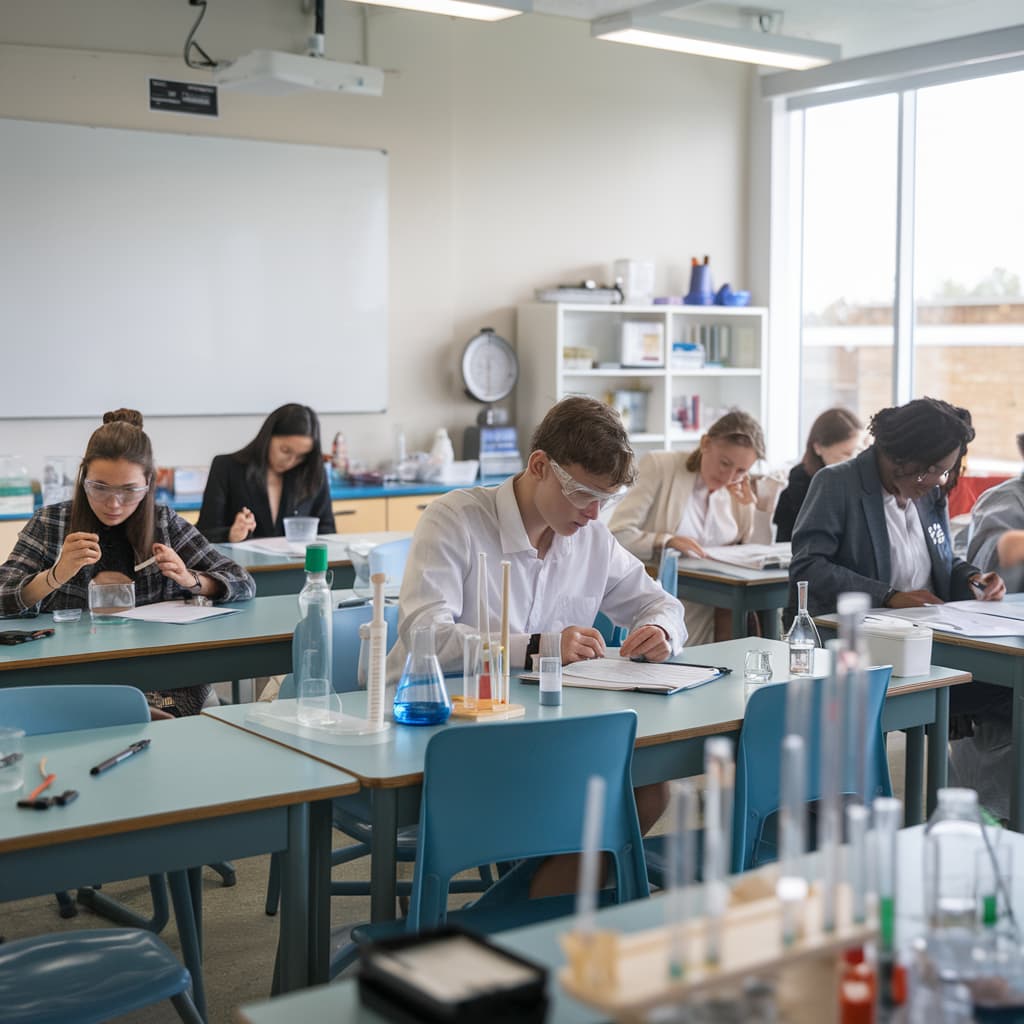
How to Choose a Chemistry IA Topic: The Selection Process & Criteria
How to Choose the Best Chemistry IA Topics: A Step-by-Step Guide Did you know that 65% of IB students struggle to choose their Chemistry IA topics? 🤔 That's right – selecting the perfect chemistry IA topic often feels like finding a needle in a haystack. Some topics might seem exciting but prove too complex, while […]

Key Takeaways
- Did you know that 65% of IB students struggle to choose their Chemistry IA topics?.
- Let's unlock the secrets of the IB Chemistry Internal Assessment requirements! Understanding these fundamentals is crucial before diving into topic selection.
- Now that you're ready to build your research framework, let's explore how to create a winning investigation plan that will impress your examiners!.
- Before diving into your exciting chemistry investigation, let's explore the practical aspects that will make your IA journey successful!.
- Ready to craft the perfect research question for your chemistry IA? This is where your investigation truly comes alive!.
How to Choose a Chemistry IA Topic: The Selection Process & Criteria
65% of IB students struggle to choose their Chemistry IA topics. . This comprehensive guide covers everything you need to know about your Chemistry Internal Assessment, from choosing a viable topic to structuring your analysis for maximum marks.
Topic selection is the foundation of your entire Chemistry IA. The topic you choose will shape your research process, determine the depth of your investigation, and directly influence whether you achieve a 7 or settle for a lower score. Many students rush this crucial decision or pick topics without thoroughly evaluating feasibility, leading to frustrated investigations and wasted hours. For more on this, see our guide on writing chemistry lab reports.
The good news? Choosing a Chemistry IA topic doesn't have to be chaotic. With a systematic selection process and clear evaluation criteria, you can identify a topic that interests you, meets IB standards, and remains achievable within your school's resources.
Whether you're considering organic chemistry reactions or environmental analysis, this step-by-step guide will walk you through the complete topic selection process—from understanding IB requirements to evaluating feasibility to finalizing your research question. You may also find our resource on balancing redox reactions helpful.
Ready to master the Chemistry IA topic selection process? Let's dive in!
If you're feeling uncertain about where to start with your Chemistry IA, you're not alone — it's one of the most common challenges IB Chemistry students face. An experienced IB Chemistry tutor can help you develop your topic, structure your argument, and avoid the mistakes that cost marks. Tell us what you need help with →
Understanding Chemistry IA Requirements
Let's unlock the secrets of the IB Chemistry Internal Assessment requirements! Understanding these fundamentals is crucial before diving into topic selection.
Key Components of a Chemistry IA
The Internal Assessment consists of several essential elements that work together to showcase your scientific prowess:
- Research Design and Methodology
- Data Collection and Analysis
- Evaluation and Conclusion
- Communication and Presentation
- Personal Engagement
Get Expert Help With Chemistry IA Topic Selection
Choosing the right Chemistry IA topic is critical—it sets the stage for your entire investigation. If you're uncertain whether your topic idea meets IB standards, has sufficient depth for thorough investigation, or allows for meaningful data analysis, write an excellent chemistry IA or connect with a Chemistry IA tutor who can help you evaluate topic viability, assess feasibility with your school's equipment, and ensure your final topic selection leads to outstanding marks.
IB Assessment Criteria
The IB Chemistry IA follows a structured marking scheme with specific weightage for each component:
| Criterion | Weighting |
|---|---|
| Research Design | 6 marks |
| Data Analysis | 6 marks |
| Conclusion | 6 marks |
| Evaluation | 6 marks |
Your IA should be around 3000 words long, giving you ample length to demonstrate your scientific thinking and analytical skills.
Common Misconceptions
Many students fall into common traps when approaching their Chemistry IA. Here's what you need to know:
First, complexity doesn't equal quality. Your investigation doesn't need to be groundbreaking or incredibly complex to score well [3]. Instead, focus on executing a well-designed experiment with thorough analysis.
Second, data collection requires careful planning. You'll need at least 5 manipulations of your independent variable with 3 trials for each manipulation. This ensures sufficient data for meaningful analysis.
Remember, personal engagement doesn't mean just stating why you chose the topic. It's about showing independent thinking and creativity throughout your investigation. The key is to maintain a balance between scientific rigor and personal interest.
Safety and ethical considerations aren't optional extras – they're integral parts of your assessment. Make sure to include detailed safety precautions and disposal procedures for any chemicals used in your experiment.
The most successful IAs demonstrate thorough understanding rather than attempting to impress with complexity. Focus on clear communication, precise methodology, and thoughtful analysis to maximize your score.
Developing Your Research Framework
Now that you're ready to build your research framework, let's explore how to create a winning investigation plan that will impress your examiners!
Identifying Research Areas
The key to a successful Chemistry IA lies in choosing a topic that genuinely excites you. The IB program emphasizes practical approaches and hands-on investigations that showcase your scientific thinking [5]. Learn more in our guide on mastering organic chemistry.
Consider these promising research areas:
- Physical chemistry experiments
- Environmental analysis
- Organic chemistry reactions
- Analytical methods
- Industrial applications
Evaluating Scientific Merit
Your investigation must demonstrate strong scientific thinking and methodology. The IB Chemistry course emphasizes developing representative models and explanatory theories. When evaluating your topic's scientific merit, ensure it:
- Allows for a hypothesis where the outcome isn't completely obvious [5]
- Provides room for analysis and interpretation
- Connects to real-world applications
- Features well-defined variables and controls
Remember, your research question should be specific and supported by solid background research [7]. This isn't about reinventing chemistry – it's about investigating existing ideas with your unique perspective!
Aligning with IB Curriculum
Your topic must connect strongly with the IB Chemistry syllabus while demonstrating your personal engagement. Chemistry is often called the "central science" as it underpins both physical and biological systems.
To ensure curriculum alignment:
- Review your syllabus topics thoroughly
- Connect your investigation to core concepts
- Consider interdisciplinary approaches
- Focus on practical skill development
Your investigation should demonstrate how scientists work and communicate, while acknowledging the ethical considerations and limitations of scientific endeavors.
The practical component is central to the IB Chemistry course, offering you the chance to develop investigative skills and collaborate with peers. Make sure your chosen topic allows for meaningful hands-on experimentation while staying within safety guidelines. For topics that span both HL and SL levels, explore how HL and SL chemistry differ to ensure your topic matches your level.
Remember, your research framework should be both ambitious and achievable. Think of it as your roadmap to success – with clear directions but enough flexibility to explore interesting detours along the way!
Assessing Topic Feasibility
Before diving into your exciting chemistry investigation, let's explore the practical aspects that will make your IA journey successful!
Equipment and Resources
Getting your hands on the right equipment is crucial for your chemistry IA success. Your investigation needs proper planning to ensure you have access to:
- Basic laboratory equipment (glassware, measuring devices)
- Specific chemicals and reagents
- Precision instruments for data collection
- Safety equipment and protective gear
- Proper waste disposal facilities
Remember to verify that you have access to all necessary laboratory equipment and materials before finalizing your topic. This early check helps avoid disappointing roadblocks later!
Time Management Considerations
Time is your most valuable resource when working on your chemistry IA. Research shows that students should expect to spend approximately 20-30 hours on their IA from initial research to final edits [9]. Here's how to make every minute count:
- Create specific milestones with deadlines
- Use a physical or digital planner to track progress
- Focus on high-impact tasks first
- Maintain organized research notes
- Schedule regular feedback sessions
Start early and plan for potential do-overs – thorough planning is more critical for Chemistry IA than any other IB component [10]!
Safety and Ethical Guidelines
Safety isn't just a checkbox – it's the foundation of good scientific practice! Your investigation must prioritize safety at every step. Here's what you need to consider:
- Risk Assessment:
- Identify potential hazards for all chemicals
- Evaluate likelihood and severity of risks
- Implement appropriate control measures
- Safety Protocols:
- Use protective equipment (goggles, lab coat)
- Work in well-ventilated areas
- Follow proper chemical handling procedures
- Document disposal methods
Remember that safety considerations should be explicitly linked to your variables. For instance, if you're working with hot solutions, specify the use of heat-resistant gloves and proper handling techniques.
Important: Always get your IA checked by your teacher before starting any lab work. This ensures your experiment is both safe and feasible within your school's resources.
By carefully considering these practical aspects, you're setting yourself up for an exciting and successful chemistry IA journey. Remember, a well-planned investigation is already halfway to success!
Creating an Effective Research Question
Ready to craft the perfect research question for your chemistry IA? This is where your investigation truly comes alive!
Components of Strong Research Questions
A powerful research question needs specific elements to shine. Here's what makes your question stand out:
- Clear Focus and Purpose
- Must be precisely worded and testable [13]
- Should demonstrate personal significance
- Must align with IB chemistry curriculum
- Needs to show scientific context
- Measurable Outcomes
- Requires quantifiable variables
- Must generate visible results through observations
- Should allow for data collection and analysis
Variables and Controls
Your research question must include well-defined variables that work together seamlessly. Let's break them down:
Independent Variable:
- Requires minimum 5 different values
- Must be scientifically quantifiable
- Should have equal intervals between values
- Needs to be something you can deliberately change
Dependent Variable:
- Must be measurable and quantifiable [15]
- Should respond clearly to independent variable changes
- Needs precise measurement methods
Remember to identify your controlled variables – these are elements you'll keep constant throughout your experiment to ensure reliable results.
Testing Your Question
Before finalizing your research question, put it through these essential checks:
Feasibility Check:
- Verify access to required equipment and chemicals [15]
- Ensure data collection is possible within 10 hours [15]
- Confirm safety protocols can be followed
Scientific Merit:
- The question should allow for hypothesis testing [5]
- The outcome shouldn't be 100% predictable
- Must provide room for analysis and interpretation
Personal Connection:
- Shows genuine curiosity and interest [5]
- Demonstrates independent thinking
- Allows for creative approaches
Your research question should read like a focused summary of your project aims, clearly stating both your independent and dependent variables. This clarity will guide your entire investigation process!
Remember, a strong research question is like a well-designed experiment in itself – precise, measurable, and full of potential for discovery. When you nail this crucial element, you're setting yourself up for an exciting and successful chemistry IA journey!
Evaluating Topic Strength
Time to supercharge your chemistry IA by evaluating its strength across crucial criteria! This evaluation will ensure your topic not only meets IB requirements but also showcases your scientific prowess.
Personal Engagement Criteria
Your topic needs to sparkle with personal engagement! The IB awards up to 2 marks for this criterion, and here's what makes it shine:
Independent Thinking and Creativity:
- Novel or unusual research approach
- Creative data collection methods
- Unique analysis techniques
The key is showing genuine curiosity and personal significance in your topic choice. Your investigation should reflect your authentic interest, whether it's related to local environmental issues or a family member's medical treatment.
| Engagement Level | Description | Mark |
|---|---|---|
| Limited | Little independent thinking, minimal initiative | 1 |
| Significant | Clear creativity, strong personal input | 2 |
Scientific Context Analysis
Your topic must demonstrate strong scientific merit and contextual understanding. The IB looks for:
Research Relevance:
- Clear connection to chemistry principles
- Appropriate background information
- Enhanced understanding of investigation context
Remember, your topic should allow for meaningful data collection with at least 5 manipulations of your independent variable and 3 trials for each. This ensures robust scientific analysis and reliable conclusions.
Methodology Assessment
Get ready to shine in your methodology! A strong topic allows for:
- Experimental Design Excellence:
- Clear variable control
- Precise measurement techniques
- Appropriate equipment selection
- Safety and Ethics:
- Comprehensive risk assessment
- Environmental impact consideration
- Proper chemical disposal procedures
Your methodology should be highly appropriate to address your research question, considering all significant factors that might influence data reliability.
The best topics demonstrate a clear understanding of methodological issues. Think about potential limitations and how you'll address them. Your investigation should show initiative in both design and implementation.
Remember to consider the practical aspects too! Your topic should allow for sufficient data collection within the time constraints while maintaining scientific rigor. The IB loves to see modifications to standard methods that demonstrate your creative thinking. To understand how your IA fits into broader chemistry success, learn about top-scoring IA topics.
By thoroughly evaluating these aspects, you're setting yourself up for an outstanding chemistry IA. Your topic should feel like a perfect fit – challenging enough to be interesting, yet manageable enough to execute brilliantly!
Get Expert Guidance for Chemistry IA Success
Topic selection is just the beginning of your Chemistry IA journey. Once you've chosen your research question, you'll face the challenges of experimental design, data collection, statistical analysis, and writing a compelling report that meets all IB criteria. Work with a Chemistry IA specialist who can guide you through each phase—from refining your methodology to interpreting your results and crafting arguments that demonstrate sophisticated scientific thinking.
Conclusion
Mastering the Chemistry IA topic selection process is the foundation of achieving excellence in your IB journey. The topic you choose directly impacts your ability to complete rigorous research, demonstrate scientific thinking, and ultimately score a 7 on this critical assessment.
A well-selected topic combines genuine scientific curiosity with practical feasibility, clear alignment with IB requirements, and real potential for meaningful investigation. Success in your Chemistry IA begins with careful evaluation of feasibility, available resources, and how well potential topics meet IB criteria.
The best Chemistry IA topics aren't necessarily the most complex ones. Rather, they reflect a thoughtful selection process where you balance personal interest against practical constraints, ensuring you can execute a rigorous investigation that showcases your independent thinking. Armed with this comprehensive guide, you can now confidently work through the topic selection process and identify a topic that truly fits your circumstances and interests. Take time to evaluate potential topics carefully using the frameworks outlined here, and you'll set yourself up for success in this important component of your IB Chemistry journey.
Frequently Asked Questions
How do I choose a feasible Chemistry IA topic within the time and resource constraints?
Feasibility is crucial when selecting your Chemistry IA topic. Consider the equipment and materials available at your school, the time required to collect sufficient data, and your own expertise in laboratory techniques. A feasible topic should allow you to complete data collection within 10-12 hours of practical work, which typically spans 2-4 weeks depending on your school's timetable. Avoid topics requiring specialised equipment or hazardous procedures that your school cannot safely accommodate, as this will compromise both your safety and the assessment criteria for practical skills.
What are the key differences between HL and SL Chemistry IA topics?
Whilst the internal assessment structure is identical for both HL and SL students, Higher Level candidates are expected to demonstrate greater depth and sophistication in their investigations. HL topics often involve more complex variables, quantitative analysis, or theoretical frameworks, whereas SL topics typically focus on more straightforward relationships and data collection methods. Both levels must achieve the same assessment criteria, but HL students should consider topics that allow for more advanced exploration of chemical principles, such as investigating factors affecting equilibrium constant values or analysing buffer capacity across a wider concentration range. Explore our detailed guide on Le Chatelier's principle for more tips.
What data collection methods work best for Chemistry IA investigations?
The most reliable data collection methods depend on your chosen topic, but generally involve quantitative measurements using appropriate laboratory equipment. Titration, temperature monitoring with data-logging equipment, spectrophotometry, and mass measurement are all common approaches that yield precise, repeatable results. Your method must be systematic and allow for multiple trials—at least three replicates per data point—to ensure valid conclusions about uncertainty and errors. Qualitative observations should support your quantitative data but should never form the primary evidence base, as the IB emphasises measurable, analysable results.
What common topic mistakes should I avoid in my Chemistry IA?
Many students choose overly ambitious topics that require excessive time or resources, such as synthesising complex organic compounds or investigating reaction kinetics across extreme temperature ranges. Others select topics that are too vague, making it difficult to collect meaningful data or draw conclusions, or they choose investigations where the outcome is already well-established in literature, leaving little room for genuine personal engagement. Avoid topics that depend entirely on qualitative observations, those requiring hazardous chemicals or procedures your school cannot support, and investigations where you cannot collect at least 15 meaningful data points for analysis.
Should I choose an original topic or something based on existing research?
The IB encourages personal engagement and originality, but your topic should be grounded in established chemistry concepts and, ideally, related to published research or recognised experimental procedures. Completely novel topics often lack proper scientific foundation and may be difficult to analyse meaningfully. Instead, aim for a topic that applies familiar chemistry principles in a slightly novel context—for example, adapting a standard titration method to analyse a real-world sample or investigating how a parameter that textbooks typically hold constant actually affects your chosen reaction. This balance demonstrates both scientific integrity and genuine intellectual curiosity.
How should I evaluate whether my topic meets IB assessment criteria before I start?
Before commencing your investigation, carefully review the assessment criteria for personal engagement, exploration, analysis, and evaluation. Your topic should allow you to justify your research question, explain the underlying chemistry authentically, demonstrate practical competence through controlled data collection, analyse your results using appropriate mathematical and statistical methods, and reflect critically on limitations and sources of error. Consider consulting with your chemistry teacher or an IB tutor to ensure your topic offers sufficient scope across all criteria. Explore how to analyze data for or visit our tutoring packages for personalised support.
References
[1] – https://www.mrgscience.com/internal-assessment-exploration.html
[2] – https://www.ahschools.us/cms/lib/MN01909485/Centricity/Domain/4810/Chem 2andIB Chem/IA Student Guide.pdf
[3] – https://lanterna.com/blog/chemistry-ia-tips-and-15-ideas/
[4] – https://mrkremerscience.com/wp-content/uploads/2013/09/ib-chemistry-ia-student-guide.pdf
[5] – https://nailib.com/blog/ib-chemistry-ia
[6] – https://www.ibo.org/programmes/diploma-programme/curriculum/sciences/chemistry/
[7] – https://nailib.com/blog/chemistry-ia-ideas
[8] – https://www.apguru.com/blog/ib-chemistry-ia-choosing-an-investigation-topic-2
[9] – https://www.revisiondojo.com/blog/how-much-time-should-i-spend-on-my-ia
[10] – https://tutorsplus.com/how-write-your-chemistry-ia/
[11] – https://thesciencecodex.wordpress.com/hl-chemistry-internal-assessment/
[12] – https://www.peakib.com/resources/50-ideas-for-your-ib-chemistry-ia
[13] – https://www.revisiondojo.com/blog/navigating-the-ib-chemistry-ia-from-planning-to-execution
[14] – https://chemistrytutor.me/ib-chemistry-guide-ia-research-questions/
[15] – https://qeducation.sg/ib-tips/how-to-ace-your-ib-chemistry-internal-assessment/
[16] – https://sites.google.com/view/ibchemistry/internal-assessment/personal-engagement
[17] – https://www.mrgscience.com/internal-assessment-personal-engagement.html
[18] – https://tibertutor.com/ib/chemistry/useful-resources/internal-assessment/ia-criteria