How to Teach Time Management Skills That Actually Stick (A Parent's Guide)
How to Teach Time Management Skills That Actually Stick (A Parent's Guide) Did you know that 87% of students struggle with basic time management skills? I've seen this firsthand as both a parent and educator. Whether it's rushing to finish homework at the last minute or forgetting about important activities, our kids often find themselves […]
How to Teach Time Management Skills That Actually Stick (A Parent’s Guide)
Did you know that 87% of students struggle with basic time management skills? I’ve seen this firsthand as both a parent and educator.
Whether it’s rushing to finish homework at the last minute or forgetting about important activities, our kids often find themselves overwhelmed by time-related challenges. But teaching time management isn’t as simple as buying your child a planner or setting strict schedules.
In fact, most traditional approaches to time management fail because they don’t address how children actually learn and process time concepts. That’s why I’ve developed practical strategies that actually stick – tested and proven with real families.
Ready to help your child master time management skills that last? Let’s explore effective techniques that transform rushing, stressed-out kids into confident time managers who get things done.
Why Most Time Management Teaching Fails
Parents often struggle with teaching time management, primarily because traditional approaches don’t match how children’s brains process time concepts [1]. Moreover, many children experience difficulties with time management due to their brain’s executive functions, which control planning, task completion, and focus [1].
Common mistakes parents make
One of the most significant errors occurs when parents overschedule their children’s lives [2]. Subsequently, instead of learning effective time management, children feel constantly rushed and overwhelmed [2]. Furthermore, this packed schedule leaves little room for children to practice managing their own time [3].
Three critical mistakes that undermine time management teaching:
- Expecting immediate results without considering that time management skills develop gradually [4]
- Constantly nagging and hovering, which discourages independence [4]
- Setting unrealistic expectations without understanding their child’s cognitive development stage [1]
What children actually need
Children need a different approach to grasp time management effectively. Primarily, they require understanding time as a tangible concept since time itself is invisible and abstract [4]. This explains why many children struggle to estimate how long tasks take or plan accordingly [4].
Rather than strict schedules, children benefit from experiencing natural consequences of their time choices [5]. For instance, when a child doesn’t study for a test or complete homework on time, allowing them to face the results teaches more effectively than parental intervention [6].
Additionally, children need downtime to process and develop these skills naturally [3]. Research shows that many students today move directly from school to activities to homework, with substantial reductions in daily free time [3]. This constant activity prevents them from developing genuine time management abilities [3].
The key lies in creating opportunities for children to practice managing their own time while providing guidance rather than control. This approach helps them develop internal motivation and understanding of time concepts [1]. By recognizing that time management skills are tied to brain development, parents can adjust their teaching methods to match their child’s cognitive abilities [1].
Start With the Basics
Building effective time management skills starts with making time a tangible concept for children. Time, being abstract in nature, often confuses young minds who struggle to grasp its passing [7].
Teaching clock awareness
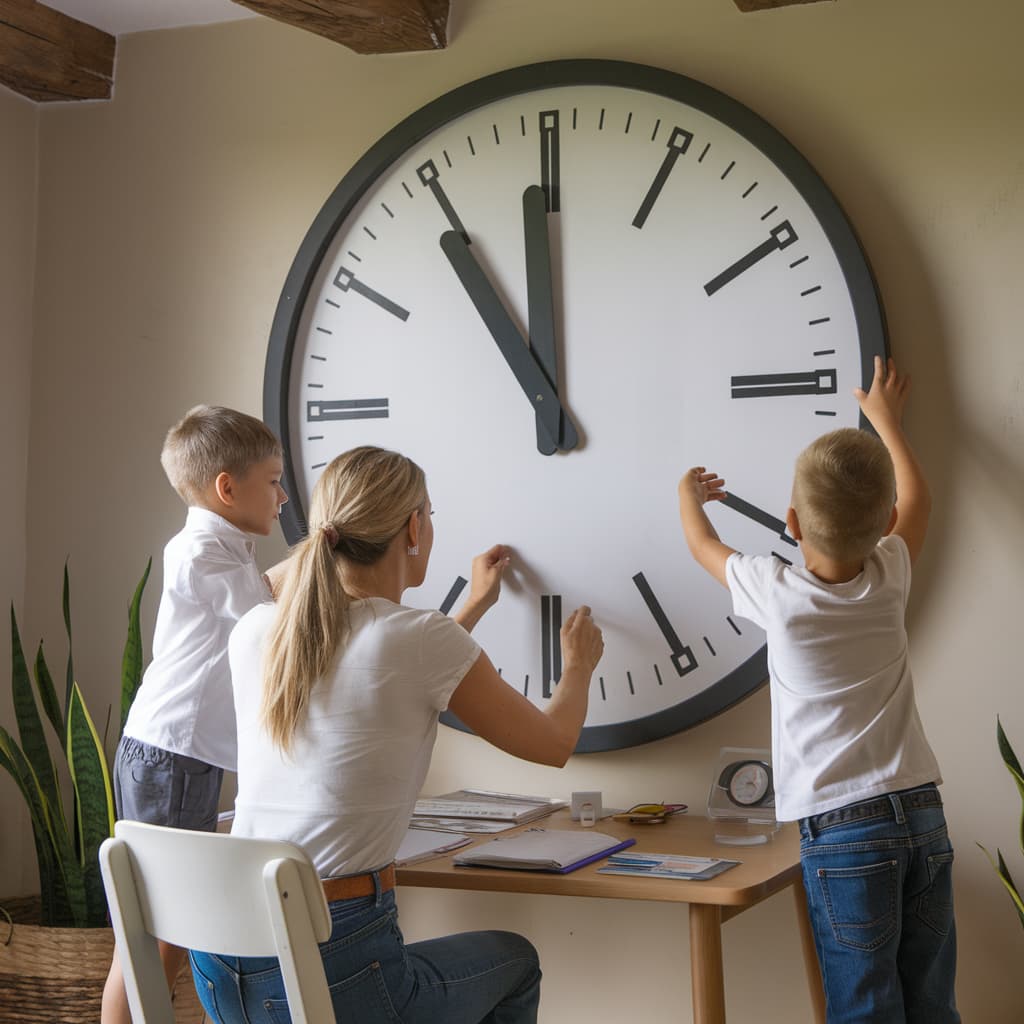
Analog clocks serve as powerful tools for developing time awareness in children. Unlike digital displays, analog clocks allow children to physically see time move, helping them understand its three-dimensional nature – past, present, and future [8]. Placing analog clocks in every room, particularly in spaces where children complete daily tasks, creates constant opportunities for time awareness practice [8].
Simple daily routines
Establishing consistent daily schedules creates a foundation for time management success. Children thrive on predictability, as it helps them feel secure and confident about what lies ahead [9].
Three essential components of effective routines:
- Set wake and sleep times that remain consistent
- Regular mealtimes that serve as daily anchors
- Structured activity periods balanced with unstructured play [10]
Making time visible
Visual tools transform abstract time concepts into concrete, manageable pieces for children. Time Timer devices, particularly helpful for children with special needs, display time through color-coded sections that disappear as minutes pass [7]. These visual aids reduce anxiety by showing exactly how much time remains for specific activities [7].
Visual schedules, another essential tool, break down daily activities into clear, sequential steps. These schedules can use pictures, symbols, or written words, depending on the child’s comprehension level [7]. Essentially, they provide a roadmap that children can follow independently, reducing their reliance on constant parental prompts [7].
Particularly effective are interactive time awareness activities. Children learn better when they can physically engage with time concepts. Creating a “rock clock” for heavy work input or using sidewalk chalk to draw large clock faces offers hands-on learning experiences [11]. Generally, these activities support both motor planning and time awareness simultaneously.
Although mastering time concepts takes practice, specifically designed visual aids and consistent routines create a supportive learning environment. These foundational elements help children develop their “time sense” naturally, setting the stage for more advanced time management skills [8].
Build Core Time Skills
Once children grasp basic time concepts, developing core time management skills becomes crucial. These foundational abilities shape how effectively they’ll handle tasks throughout their lives.
Task breaking practice
Breaking large tasks into smaller pieces significantly reduces stress and increases productivity [12]. This approach helps children overcome procrastination and builds confidence as they see steady progress toward completing each goal.
To master task breaking, children need clear routines and visual aids. A laminated checklist in their folder listing steps for multi-step tasks proves highly effective [2]. Likewise, using a small flip chart to organize steps of an activity helps children who find traditional checklists overwhelming.
Time estimation games
Time estimation activities transform abstract time concepts into engaging learning experiences. One effective game involves timing various activities and comparing estimated versus actual duration [5]. For instance, children can guess how many jumping jacks they can complete in one minute, then test their prediction.
Through these games, children develop:
- Understanding of time intervals
- Ability to plan realistic schedules
- Skills to manage deadlines effectively
Priority setting exercises
Teaching prioritization becomes vital around the time children start school [13]. The Eisenhower Matrix, also known as Covey Quadrants, helps children sort tasks based on importance and urgency [13]. This tool enables them to distinguish between tasks that need immediate attention and those that can wait.
A practical approach involves using the “rock, pebble, and water” analogy [4]. Rocks represent essential tasks like homework and sleep, pebbles symbolize extracurricular commitments, and water represents leisure activities. This visual demonstration helps children understand how to fit various activities into their daily schedule.
Regular practice with these core skills creates lasting habits. Through consistent application, children learn to estimate task duration more accurately [12], break complex projects into manageable pieces [2], and make better decisions about how to use their time [13]. Consequently, they develop the confidence to tackle larger projects and manage their schedules independently.
Create Daily Success Habits
Successful time management habits emerge from well-structured daily routines. Research shows that children who follow consistent schedules feel more secure and confident about their daily activities [14].
Morning routine building
Starting the day right requires preparation and structure. Indeed, children who wake up to predictable patterns show improved focus and reduced anxiety throughout their day [15].
A successful morning routine includes:
- Preparing clothes and supplies the night before
- Setting consistent wake-up times
- Including time for breakfast and personal care
- Building in buffer time for unexpected delays
The key to morning success lies in parent preparation. Therefore, waking up 15 minutes before children provides time to organize and set a positive tone for the day [16]. During this quiet time, parents can prepare mentally and physically for guiding their children through the morning schedule.
After-school schedule setup
Soon after school ends, children need a structured yet flexible routine to transition from academic to home life [6]. Research indicates that students often feel overwhelmed by fitting everything into the few short hours after school [4].
The most effective after-school schedules start with a short decompression period. Children benefit from 15-20 minutes of unstructured time to reset their minds after a full day of learning [1]. Following this break, establish a consistent homework time in a designated, distraction-free space [17].
Nonetheless, flexibility remains crucial. Children respond better to routines when they have some input into their schedule [14]. By allowing them to choose between acceptable options, such as completing homework immediately after snack time or taking a short break first, they develop both independence and time management skills.
Visual schedules prove especially helpful for maintaining after-school routines [18]. These can be as simple as a magnetic chart on the refrigerator or a laminated checklist in their folder. Similarly, using timers helps children understand how long different activities should take, making the abstract concept of time more concrete [4].
Regular practice with these routines creates lasting habits. As children master their schedules, they naturally develop better time estimation skills and learn to manage their responsibilities independently [10]. Through consistent implementation, these daily success habits form the foundation for lifelong time management skills.
Turn Skills Into Long-term Habits
Regular family meetings form the cornerstone of lasting time management habits. Research shows that conducting weekly planning sessions helps children develop systematic methods for using their time effectively [6].
Weekly practice sessions
Family participation in weekly planning creates a structured environment for learning time management. Parents and children collaborate to outline schedules and determine priorities, helping maintain order and focus on achieving objectives [6]. These sessions offer opportunities to analyze weekly schedules, emphasize important activities, and ensure crucial tasks are completed on time.
Creating a shared family calendar, either digital or physical, serves as an effective organizational tool. This collective schedule helps track critical dates and events while enhancing coordination within the family unit [6].
Progress tracking methods
Monitoring progress requires consistent evaluation and feedback. Parents should regularly check their children’s schedules, discuss challenges, and celebrate achievements [19]. This approach allows for timely adjustments and provides necessary support for developing effective time management habits.
A visual timer displayed prominently helps children understand how much time remains for specific tasks [4]. This tool makes time literally visible, enabling children to pace themselves more effectively. Grade-school students benefit from being held accountable for their assignments while experiencing natural consequences of their time management choices [4].
Reward systems that work
Research indicates that monetary rewards often decrease motivation [20]. Instead, the most powerful motivators include:
- Personal satisfaction from achieving meaningful goals
- Regular feedback on progress
- Authority to make impactful decisions
- Opportunities for growth and development
- Flexibility as a reward for good performance
Personalization plays a crucial role in creating effective reward systems. Each child responds differently to recognition, hence the importance of tailoring rewards to individual preferences [20]. Regular feedback becomes one of the biggest drivers of performance, helping children make progress toward their goals while creating motivation and engagement.
Celebrating achievements, regardless of size, strengthens time management habits through positive reinforcement [6]. This celebration can reduce stress levels and boost confidence as children learn to manage important tasks within given timeframes. Parents maintain a vital role by providing encouragement and support, ultimately helping children stay focused on their goals [19].
Conclusion
Teaching time management skills requires patience, consistency, and the right approach. Most children struggle with time concepts, yet they can master these essential life skills through proper guidance and practice.
Therefore, starting with basic time awareness and gradually building toward complex scheduling helps children develop lasting habits. Making time visible through analog clocks, visual schedules, and interactive activities creates a strong foundation for success.
Additionally, regular family meetings and consistent routines transform these skills into natural habits. Children learn best when they experience both independence and support while managing their daily responsibilities.
Most importantly, remember that each child develops these skills at their own pace. Small victories lead to significant progress over time. Help your child excel with time management strategies, supported by tutors at IB ++ Tutors.
Success comes from staying patient and maintaining realistic expectations while your child develops these crucial life skills. Through steady practice and positive reinforcement, your child will build time management abilities that serve them throughout their academic journey and beyond.
FAQs
Q1. At what age should parents start teaching time management skills to their children?
Parents can begin introducing basic time concepts as early as preschool age. However, more structured time management skills can be taught effectively when children start elementary school, around ages 6-7. The key is to match the teaching approach to the child’s cognitive development stage.
Q2. How can I make time management fun for my child?
Make time management engaging by using visual aids, games, and interactive activities. Try time estimation games, create colorful schedules, or use the “rock, pebble, and water” analogy to teach prioritization. Turning learning into a playful experience helps children grasp these abstract concepts more easily.
Q3. What are some signs that my child is struggling with time management?
Common signs include consistently rushing to complete homework, forgetting about important activities, difficulty estimating how long tasks will take, and feeling overwhelmed by daily responsibilities. If you notice these behaviors regularly, it may indicate your child needs additional support in developing time management skills.
Q4. How can I help my child break down large tasks into manageable pieces?
Teach your child to use visual aids like checklists or flip charts to break down complex tasks. Start by modeling the process, then gradually let them take the lead. Encourage them to identify smaller, actionable steps and celebrate the completion of each one to build confidence and momentum.
Q5. What role do routines play in developing time management skills?
Consistent routines are crucial for developing time management skills. They provide a predictable structure that helps children feel secure and confident about their daily activities. Establish regular wake-up times, mealtimes, and homework periods. This consistency allows children to practice managing their time within a familiar framework, gradually building their skills and independence.
References
[1] – https://thisroutinelife.com/the-after-school-routine-that-works-for-our-family/
[2] – http://blog.brookespublishing.com/11-tips-on-breaking-tasks-down-for-students-an-executive-function-post/
[3] – https://www.psychologytoday.com/us/blog/inside-education/201704/kids-cant-learn-time-management-without-time-to-manage
[4] – https://www.scholastic.com/parents/family-life/parent-child/teach-kids-to-manage-time.html
[5] – https://www.education.com/activity/article/minute_math_second/
[6] – https://lemonadeday.org/blog/time-management-for-kids
[7] – https://www.therapyshoppe.com/teachers-spot/403-visual-timers-and-schedules-helping-kids-manage-time-and-transitions?srsltid=AfmBOoqK0dtc3bjaBebms95OmFLoZQ_Zni9Kouup2q-mKoCkeSDY_v5N
[8] – https://www.additudemag.com/time-management-for-kids-tips-for-adhd-child/?srsltid=AfmBOoozRx2l1cBPEzufuls3uO-K56e9Ei73t9yYBiTu3jpg4bPjUq9U
[9] – https://www.pbs.org/parents/routines
[10] – https://www.childrens.com/health-wellness/how-to-create-a-daily-routine-for-kids
[11] – https://www.theottoolbox.com/build-clock-hands-on-learning-teach-time/
[12] – https://untappedlearning.com/breaking-large-tasks-into-small-pieces/
[13] – https://www.beyondbooksmart.com/executive-functioning-strategies-blog/6-ways-to-help-your-child-become-better-at-prioritization
[14] – https://www.calendar.com/blog/how-to-teach-time-management-skills-to-kids-and-teens/
[15] – https://www.care.com/c/morning-routine-for-kids/
[16] – https://www.thezebra.com/resources/home/morning-routine-for-kids/
[17] – https://learningevaluationcenter.org/establishing-an-effective-after-school-routine-for-middle-schoolers/
[18] – https://consciousdiscipline.com/how-to-create-a-daily-schedule-for-young-children/
[19] – https://www.jetlearn.com/blog/develop-time-management-skills
[20] – https://hr.umn.edu/Supervisors/Managing-Performance-and-Development/How-reward-recognize-and-encourage-strong