How to Master the IB Chemistry Syllabus: A Perfect Study Plan
How to Master the IB Chemistry Syllabus: A Perfect Study Plan Did you know that only 4% of IB Chemistry students achieve a perfect score of 7? 🤔 That's because the IB chemistry syllabus is one of the most challenging courses in the International Baccalaureate program. Between complex theoretical concepts, demanding laboratory work, and extensive […]
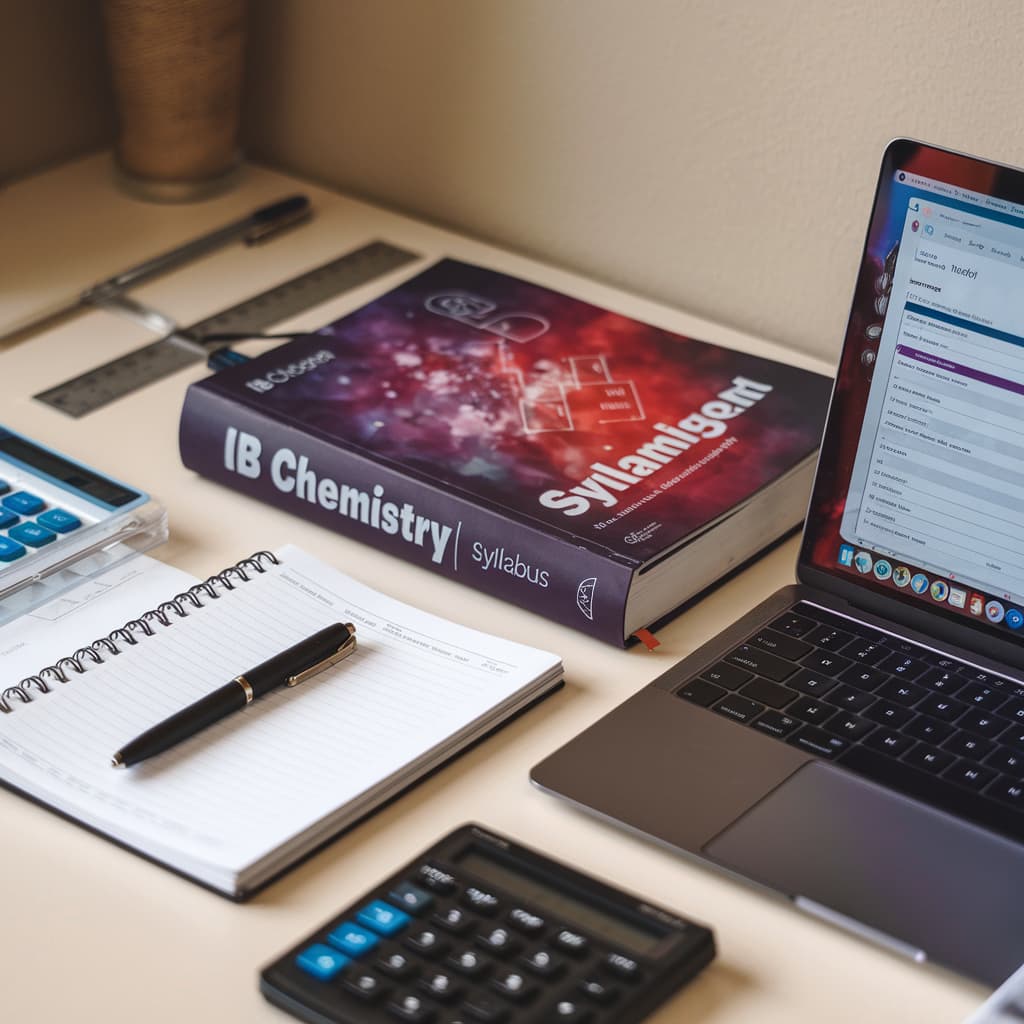
How to Master the IB Chemistry Syllabus: A Perfect Study Plan
Did you know that only 4% of IB Chemistry students achieve a perfect score of 7? 🤔
That’s because the IB chemistry syllabus is one of the most challenging courses in the International Baccalaureate program. Between complex theoretical concepts, demanding laboratory work, and extensive exam requirements, many students feel overwhelmed.
But here’s the good news: scoring well in IB Chemistry isn’t about natural talent – it’s about having the right study strategy. Students who follow a structured approach are three times more likely to achieve their target scores compared to those who study randomly.
Whether you’re just starting your IB journey or preparing for your final exams, mastering the IB chemistry syllabus becomes much easier with a well-planned approach.
Ready to transform your chemistry study routine into a grade-boosting powerhouse? Let’s break down exactly how to do it!
Understanding Your Learning Style for Chemistry Success
Let’s unlock your chemistry learning potential! Recent studies show that students who understand their learning style are 50% more likely to improve their academic performance [1].
Identifying Your Chemistry Learning Profile
Your brain has a unique way of processing chemical concepts. Data shows that adaptive learning helps students move from failing grades to passing marks, particularly benefiting those with lower initial performance [2]. Here are the main chemistry learning profiles:
- Visual-Spatial Learners: Excel with molecular models and diagrams
- Hands-on Experimenters: Learn best through laboratory work
- Logical-Sequential: Thrive on step-by-step problem-solving
- Collaborative Learners: Benefit from group discussions
Matching Study Techniques to Your Style
The key is matching your learning profile with the right study approach. Research indicates that students experience optimal learning moments 23.5% more frequently during active problem-solving compared to passive listening [3].
For example, if you’re a visual learner, using molecular models and drawing reaction mechanisms will help you grasp concepts more effectively. Hands-on learners should focus on laboratory work integration, while logical thinkers might prefer systematic problem-solving approaches.
Creating a Personalized Learning Framework
Building your personalized framework is crucial for mastering the IB chemistry syllabus. Studies reveal that data-driven personalization can boost student performance by up to 50% in challenging subjects [4].
Start by:
- Assessing Your Current Approach: Track which study methods give you the best results
- Implementing Active Learning: Focus on problem-solving and practical applications
- Regular Self-Assessment: Monitor your progress and adjust strategies as needed
Remember, personalization isn’t just about preference – it’s about effectiveness. Research shows that students who actively engage through adaptive learning methods are significantly more likely to perform better in chemistry [2]. Your learning framework should evolve as you progress through different topics and identify what works best for you.
By understanding and applying your unique learning style, you’re not just studying chemistry – you’re optimizing your entire learning experience for maximum success.
Building Strong Foundational Knowledge
Ready to build your chemistry foundation? Let’s dive into the exciting world of chemical concepts that will set you up for success!
Mastering Core Chemical Concepts
The new IB chemistry syllabus has significantly reduced the content load to focus on deeper understanding [5]. This exciting change means you’ll spend more time mastering fundamental concepts rather than rushing through topics. The syllabus organizes everything around two powerful concepts: structure and reactivity [5].
Your foundation should include these essential elements:
- Atomic structure and bonding patterns
- Stoichiometric relationships
- Thermodynamic principles
- Reaction mechanisms
- Equilibrium concepts
Creating Concept Maps and Knowledge Trees
Here’s something amazing – students using concept maps scored 5% higher on multiple choice and 10% higher on written portions of their exams [6]! Concept mapping isn’t just about drawing pretty diagrams; it’s about connecting ideas in meaningful ways.
When creating your concept maps, focus on building relationships between different topics. For instance, link atomic structure to bonding patterns, and connect those to reaction mechanisms. This visual approach helps you see the bigger picture and spot connections you might have missed.
Developing Deep Understanding vs Memorization
Exam Survival: Your Last-Month Playbook 2026 (Students & Parents)
A comprehensive guide for IB students and parents to navigate the final month before exams. Covers study strategies, stress management, and practical tips.
Download FreeLet’s bust a common myth – chemistry isn’t about memorizing endless facts! Science, especially chemistry, is about understanding, questioning, and forming coherent pictures from pieces of information [7]. The IB program specifically emphasizes skills and techniques that help you inquire and apply knowledge in different ways [5].
Think of chemistry as solving a puzzle rather than memorizing a phone book. The IB chemistry syllabus now places greater emphasis on connecting factual, procedural, and metacognitive knowledge [5]. This approach helps you become more aware and critical of your understanding.
Remember, your goal is to develop what experts call “approaches to learning” – specific tools and techniques that help you grow your abilities to inquire and apply information in different ways [5]. By focusing on understanding rather than memorization, you’ll find yourself naturally remembering concepts because they make sense, not because you forced them into your memory.
The beauty of this approach? When you truly understand a concept, you can apply it to new situations – exactly what IB examiners love to see in your answers!
Implementing Active Learning Strategies
Time to supercharge your chemistry learning with active strategies that really work!
Practice Problem Techniques
Get ready to level up your problem-solving game! Studies show that students who regularly practice problems are three times more likely to achieve their target scores [8]. Here’s your winning strategy:
- Daily Problem Sets: Review notes and solve problems consistently
- Timed Practice: Simulate exam conditions
- Strategic Approach: Focus on understanding rather than memorization
- Peer Learning: Form study groups to discuss complex problems
- Question Analysis: Study mark schemes to understand scoring patterns
Laboratory Work Integration
Exciting news! Research shows that hands-on laboratory work significantly enhances your understanding of chemical concepts [9]. When you connect theory with practical work, you’re not just memorizing – you’re experiencing chemistry in action!
Laboratory work becomes more effective when you:
- Plan experiments before class
- Connect observations with theoretical knowledge
- Analyze results thoroughly
- Document your findings systematically
Studies reveal that students who integrate laboratory work with theoretical learning score higher on practical assessments [9]!
Self-testing and Knowledge Validation
Here’s something amazing – self-testing isn’t just about checking what you know; it’s about building confidence and identifying areas for improvement! Research indicates that students who regularly self-test show significant improvements in their understanding of basic chemistry principles [10].
Your self-testing toolkit should include:
- Weekly topic reviews
- Mock exam practice under timed conditions
- Knowledge validation through peer discussions
- Regular concept summaries in your own words
Remember, active learning isn’t just more effective – it’s more exciting! Studies show that students experience optimal learning moments 23.5% more frequently during active problem-solving compared to passive listening [11]. By combining these strategies, you’re not just studying the IB chemistry syllabus – you’re mastering it through experience and engagement!
Pro tip: Create a study schedule that balances all three aspects – problem practice, laboratory work, and self-testing. Research shows that this balanced approach leads to better long-term retention and understanding [8].
Time Management and Study Organization
Ready to master your chemistry schedule? Let’s create a time management strategy that will revolutionize your study routine!
Creating a Realistic Study Schedule
Get excited about organizing your study time! Research shows that for every hour spent in chemistry class, you should dedicate four hours to studying outside of class [12]. That might sound intimidating, but don’t worry – we’ll make it work!
Here’s your power-packed study schedule blueprint:
- Daily Dedicated Time: Set aside focused chemistry time every day [13]
- Quality Focus: Study when you’re most alert and energized
- Strategic Planning: Use a digital calendar or planner to track deadlines
- Regular Reviews: Schedule a weekly assessment of your progress
- Buffer Time: Include flexibility for unexpected challenges
Balancing Theory and Practical Work
Here’s something amazing – successful students typically allocate 60% of their time to theory and 40% to practical work [14]! This balance ensures you’re not just memorizing concepts but truly understanding them.
Your practical work integration should follow this powerful sequence:
- Plan experiments before lab sessions
- Connect observations with theoretical knowledge
- Document findings systematically
- Review and relate to classroom concepts
Managing Multiple Chemistry Topics
Let’s tackle multiple topics like a pro! Studies show that students who participate regularly in study groups achieve higher grades [13]. When managing multiple topics, focus on quality over quantity – it’s better to have intense, focused 45-50-minute study sessions than long, unfocused ones [15].
Smart Topic Management Tips:
Start with your most challenging topics when your mind is fresh. Research shows that studying chemistry when you’re alert leads to better understanding and retention [13]. Use the Pomodoro Technique – study for 25 minutes, then take a 5-minute break [16].
Remember to assess what works best for you. Take time to evaluate where you’re having difficulties on exams [13]. This self-awareness will help you adjust your study approach for maximum effectiveness.
Pro Tip: Create a study schedule that allocates specific time slots for each topic [17]. This prevents the overwhelming feeling of trying to tackle everything at once and ensures consistent progress across all areas of the IB chemistry syllabus.
Mastering Exam Techniques and Problem Solving
Get ready to crack the code of IB Chemistry exams! Let’s explore the exciting strategies that will help you ace those papers!
Understanding Question Types and Patterns
The IB Chemistry exam is like an adventure with different challenges at each level! Paper 1 consists of 30 multiple-choice questions for SL and 40 for HL [18], while Paper 2 features structured written-response questions that really test your understanding [18].
Here’s what makes each paper unique:
- Paper 1: Multiple choice with calculator and data booklet access [19]
- Paper 2: Extended response questions testing deep understanding
- Paper 1B: Data analysis and practical knowledge application [19]
The new syllabus emphasizes data analysis skills and applying knowledge in unfamiliar contexts more than ever before [19]. This means you’ll need to be ready to think on your feet!
Developing Strategic Answer Approaches
Want to know the secret to scoring high? The best way to prepare is by practicing past paper questions extensively [20]! Studies show that students who regularly work with past papers develop stronger problem-solving skills.
Smart Answer Strategies:
- Read questions carefully, paying attention to command terms
- Show all your working, especially for calculations [19]
- Use the data booklet effectively for calculations
- Apply knowledge to unfamiliar contexts confidently
Remember, Paper 2 is often considered the most rigorous exam, giving you about 1 minute and 25 seconds per mark [18]. That’s why strategic preparation is crucial!
Time Management During Exams
Here’s your power-packed time management strategy! For optimal performance, allocate approximately 1 minute per mark [21]. This means:
- Initial Review: Take 15 minutes to read and plan your answers [22]
- Strategic Order: Start with questions you’re most confident about [22]
- Time Allocation: Spend 50 minutes on each essay section [22]
- Buffer Time: Save 15 minutes at the end for review [22]
Pro Tip: When practicing, time yourself strictly. For Paper 1, aim to examine each question for a maximum of 40 seconds [23]. This disciplined approach ensures you’ll complete all questions within the allocated time.
Remember, if you encounter a challenging question, don’t get stuck! Mark it and move on [21]. You can always return to it later if time permits. Studies show that students who manage their time effectively are more likely to complete all questions and maximize their scores.
The exciting part? You now have access to calculators and the full data booklet for Paper 1 [19]! This means you can focus more on understanding and applying concepts rather than memorizing values. However, don’t fall into the trap of over-relying on these tools – understanding the underlying principles is still key to success!
Conclusion
Mastering the IB Chemistry syllabus demands dedication, smart strategies, and consistent effort. Research proves that students who combine personalized learning approaches with strong foundational knowledge achieve remarkable results in their IB journey.
Your success depends on three key elements: understanding your unique learning style, maintaining active engagement through practical work and problem-solving, and following structured time management. These components work together to create a powerful learning system that builds confidence and competence in chemistry.
Remember that excellence in IB Chemistry comes from understanding rather than memorization. Regular practice with past papers, strategic exam preparation, and balanced study schedules will help you join the top 4% of students who achieve that perfect score of 7.
Start implementing these proven strategies today, and watch your chemistry performance transform. The path to chemistry mastery lies not in natural talent but in smart, consistent application of effective study methods.
References
[1] – https://pdfs.semanticscholar.org/a765/dfd2ef6f2ae78d76ecc9794181538e8fcc15.pdf
[2] – https://pmc.ncbi.nlm.nih.gov/articles/PMC9665387/
[3] – https://www.tandfonline.com/doi/abs/10.1080/10494820.2022.2093916
[4] – https://helloblen.com/blog/3575-maximizing-ib-success-leveraging-data-driven-insights-for-improved-performance
[5] – https://blog.prepscholar.com/ib-chemistry-syllabus-hl-sl
[6] – https://www.chemedx.org/blog/concept-mapping-chemistry
[7] – https://www.chemistryhelpcenter.org/the-role-of-memorization-in-chemistry-classes/
[8] – https://www.collegevine.com/faq/18898/ib-chemistry-hl-study-strategies
[9] – https://pubs.rsc.org/en/content/articlelanding/2023/rp/d2rp00055e
[10] – https://www.researchgate.net/publication/377299328_Development_of_a_self-test_for_undergraduate_chemistry_students_how_do_students_solve_tasks_on_basic_content_knowledge
[11] – https://files.eric.ed.gov/fulltext/EJ1339455.pdf
[12] – https://www.sdstate.edu/sites/default/files/file-archive/2023-08/Tips for Success in Chemistry (Wagner).pdf
[13] – https://chemistry.stanford.edu/outreach/chemical-education/student-success/study-tips-chemistry
[14] – https://chemistrybench.com/how-to-completely-cover-the-ib-chemistry-syllabus/
[15] – https://www.chemistryhelpcenter.org/develop-good-chemistry-study-skills/
[16] – https://aceibdp.com/effective-study-schedule-for-ibdp-exam/
[17] – https://growthacademy.education/how-to-manage-multiple-subjects-effectively-while-studying/
[18] – https://blog.collegevine.com/ultimate-guide-to-ib-chemistry-hl-exam
[19] – https://sherpa-online.com/blog/read/how-to-prepare-for-the-new-ib-chemistry-exams
[20] – https://studyib.net/chemistry/blog/2782/ib-chemistry-exam-preparation
[21] – https://studiousminds.sg/2024/09/23/4-effective-time-management-tips-for-your-o-level-chemistry-exams
[22] – https://www.oxford-royale.com/articles/managing-time-exam
[23] – https://apstudents.collegeboard.org/courses/ap-chemistry/exam-tips