5 Effective Study Strategies for IB Diploma Students
5 Effective Study Strategies for IB Diploma Students The International Baccalaureate Diploma Programme (IBDP) is known for its rigorous curriculum and demanding...
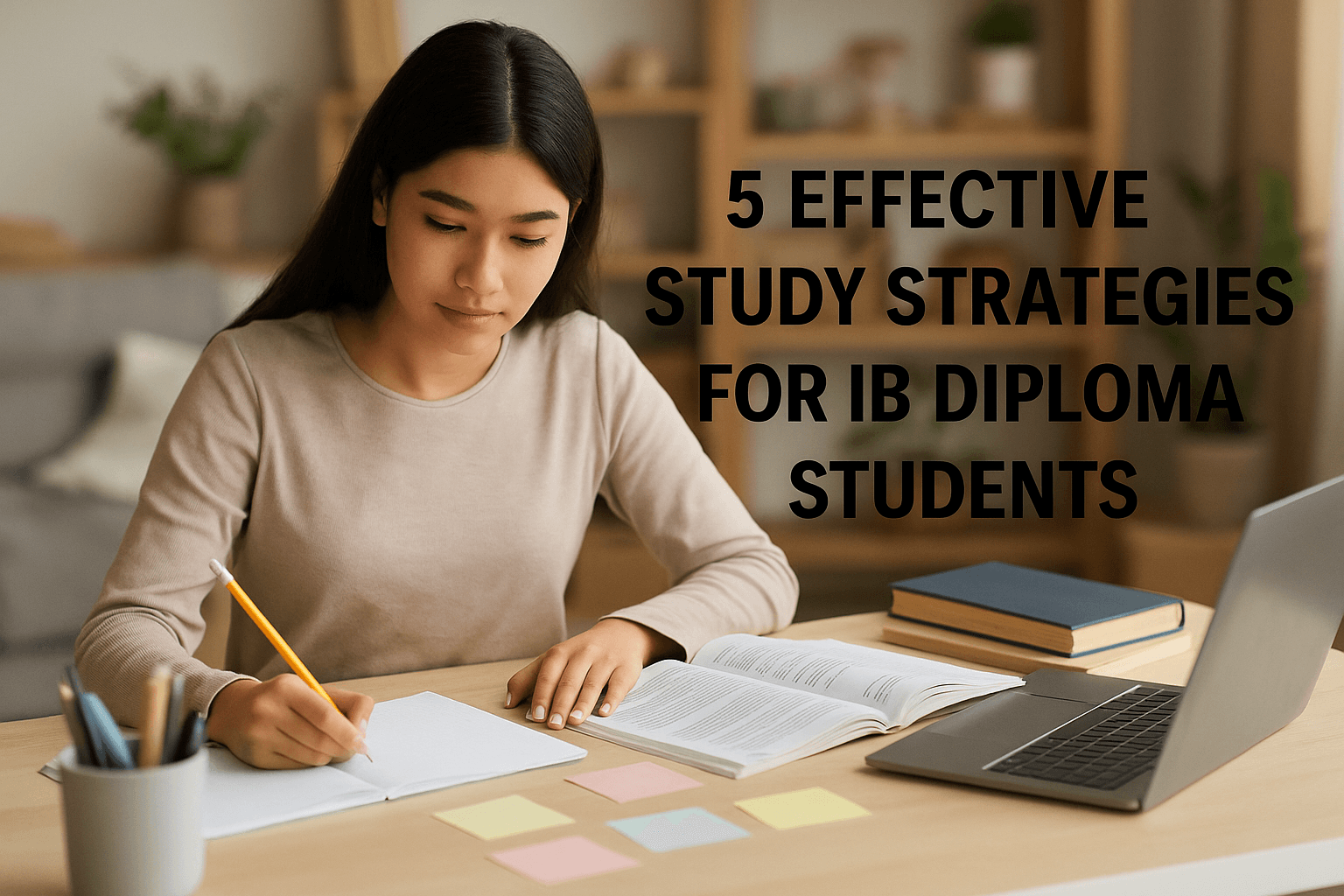
The International Baccalaureate Diploma Programme (IBDP) is known for its rigorous curriculum and demanding workload. Success in the IB requires not just hard work, but smart study strategies that help you maximize your learning efficiency. (This guide has been with the latest 2025 insights.)
Key Takeaways
- Instead of passively re-reading your notes, practice active recall by testing yourself regularly.
- With six subjects, CAS, TOK, and the Extended Essay, time management is crucial.
- Each IB subject has specific assessment criteria and command terms.
- Collaborative learning can be incredibly powerful.
- Past papers are your best friends in IB exam preparation.
Putting It All Together: Your Weekly Study Framework
Combining these five strategies into a consistent weekly routine is what separates students who survive the IB from those who thrive. Dedicate specific days to each subject's deep-work sessions, block distraction-free periods for your most challenging material, and schedule lighter review sessions for consolidation. Most successful IB students find that 25-minute focused study blocks with 5-minute breaks — the Pomodoro technique — help maintain intensity without burnout. The key is consistency: even 90 minutes of focused, strategic study daily outperforms four-hour cramming sessions that leave you exhausted and unable to retain information.
1. Master the Art of Active Recall
Instead of passively re-reading your notes, practice active recall by testing yourself regularly. Create flashcards, practice past papers, and explain concepts out loud. This method strengthens your memory and helps identify knowledge gaps early.
If you're looking for a structured approach to IB IB, working with a tutor who's been through the IB system can make a real difference — especially when it comes to exam technique and time management. Tell us what you need help with →
2. Create a Realistic Study Schedule
With six subjects, CAS, TOK, and the Extended Essay, time management is crucial. Break down your study sessions into focused 25-45 minute blocks with short breaks. Use a planner to balance your workload across all subjects and avoid last-minute cramming.
For more on this topic, explore our guide on Where the Ib Diploma Can Take You Ib Blog Tutors.
3. Understand Assessment Criteria
Each IB subject has specific assessment criteria and command terms. Familiarize yourself with these rubrics to understand exactly what examiners are looking for. This knowledge helps you structure your answers more effectively and maximize your marks.
For more on this topic, explore our guide on How to Easily Prepare for Your Final Ib Exams Study Smart Not Hard.
Applying these strategies consistently on your own takes discipline, and it helps to have someone who can identify your specific weak areas and tailor your revision plan. That's exactly what our IB tutors do. Get matched with a tutor →
4. Form Study Groups
Collaborative learning can be incredibly powerful. Join or form study groups where you can discuss challenging concepts, share resources, and teach each other. Teaching others is one of the best ways to solidify your own understanding.
5. Practice Past Papers Under Timed Conditions
Past papers are your best friends in IB exam preparation. Practice them under exam conditions to build time management skills and reduce anxiety. Analyze your mistakes and focus on areas where you consistently lose marks.
You might also find these guides helpful: 17 Time Management Strategies Ib Students Wish They Knew Earlier and How to Create a 5 Day Study Plan That Actually Works Pdf Template.
Conclusion
Success in the IB Diploma Programme comes from consistent effort and strategic preparation. By implementing these study strategies early, you'll build strong foundations that will serve you well throughout your IB journey and beyond.
Frequently Asked Questions
How far in advance should I start studying for IB IB exams?
Ideally, begin structured revision at least 8-10 weeks before your exams. This gives you enough time to cover all topics, practise past papers, and refine your exam technique without last-minute cramming.
Are past papers the best way to prepare for IB IB?
Past papers are one of the most effective revision tools because they familiarise you with the question format, timing, and mark scheme expectations. Combine them with active recall and spaced repetition for the best results.
What grade boundaries should I aim for in IB IB?
Grade boundaries vary each exam session. Focus on consistently scoring above 70-75% in practice papers for a strong result. Your teacher can provide recent boundary data for your specific course.
How do I manage exam anxiety during IB IB exams?
Practise timed past papers under exam conditions to build familiarity. On exam day, read questions carefully, allocate time per question, and start with questions you feel most confident about to build momentum.
Ready to Boost Your IB Grade?
Our IB IB tutors work with students at every level — whether you're aiming to move from a 4 to a 5 or pushing for that final jump to a 7. We'll match you with someone who understands the IB IB syllabus inside out. Find your tutor →