Online IB Tutoring: Does It Work? A Practical Guide for Parents (2026)
Online IB tutoring works. In 2026, the evidence from both research and real student outcomes is clear: one-to-one online tutoring produces results equivalent to...
Online IB tutoring works. In 2026, the evidence from both research and real student outcomes is clear: one-to-one online tutoring produces results equivalent to in-person tutoring for IB Diploma students, with the added advantage of access to specialist IB examiners and teachers worldwide. If you are a parent considering online tutoring for your child, this guide covers what to expect, how to choose, and how to get the most out of it.
Key Takeaways
- Online IB tutoring produces equivalent results to in-person tutoring for students aged 16+, with the major advantage of access to specialist tutors globally
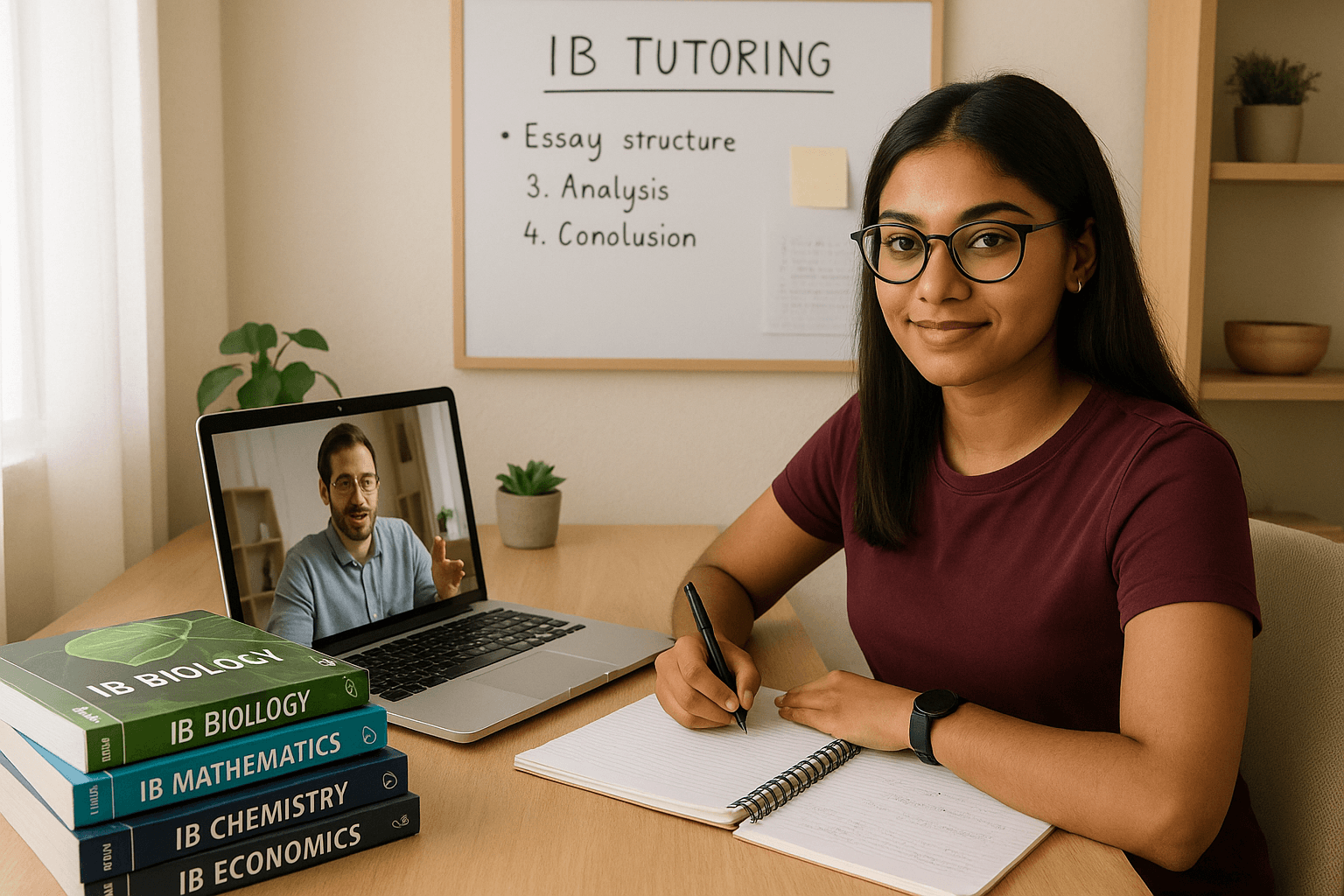
- The best online IB tutors are current or former IB examiners who teach via shared whiteboards, screen sharing, and recorded sessions
- Online tutoring costs $40-$130/hr depending on the tutor's qualifications, compared to $50-$150/hr for in-person with travel costs on top
- Students who combine regular online tutoring with independent study see an average improvement of 1-2 IB grades per subject
Ready to try it? Get matched with an online IB tutor in 24 hours.
Does Online IB Tutoring Actually Work?
The short answer is yes, and the IB Diploma programme is particularly well suited to online delivery. Here is why:
The IB is a global programme. IB World Schools are spread across 150+ countries, and the pool of highly qualified IB tutors (especially examiners and experienced teachers) is similarly global. In-person tutoring limits you to whoever lives near you. Online tutoring gives your child access to the best IB educators regardless of where they are based.
The IB assessment model is well suited to online teaching. IB exams test essay writing, data analysis, problem solving, and oral presentation skills. All of these can be effectively taught and practised through video calls with screen sharing, shared whiteboards, and document collaboration. The Internal Assessment, which is worth 20% in most subjects, involves written reports and essays that are naturally reviewed and improved through screen-based feedback.
The research supports it. Multiple studies confirm that one-to-one online tutoring produces academic outcomes equivalent to in-person tutoring for secondary school and older students. The key factor is not the medium (online vs in-person) but the quality of the tutor and the consistency of the sessions.
What Good Online IB Tutoring Looks Like
Not all online tutoring is created equal. Here is what to look for:
Live One-to-One Sessions (Not Pre-Recorded Videos)
Effective IB tutoring is interactive. Your child should be working through problems, answering questions, and receiving real-time feedback, not passively watching a lecture. The tutor should adapt to your child's specific needs in each session.
Shared Whiteboards and Screen Sharing
For subjects like Maths, Physics, and Chemistry, a shared whiteboard is essential. The tutor should be able to draw diagrams, write equations, and annotate your child's work in real time. For essay-based subjects like History, English, and Economics, screen sharing with document annotation allows the tutor to provide line-by-line feedback on essays and IA drafts.
Recorded Sessions for Revision
One of the biggest advantages of online tutoring is the ability to record sessions. Your child can rewatch a difficult explanation during revision, which is especially valuable for content-heavy subjects. Ask whether the platform supports recording.
Consistent Scheduling
Online tutoring makes it easier to maintain a regular schedule because there is no travel time. The most effective pattern is weekly sessions (60-90 minutes) at the same time each week, with homework or practice between sessions.
Feeling overwhelmed by options? Our Client Success Manager can help you find the right online IB tutor.
Online IB Tutoring vs In-Person: A Fair Comparison
| Factor | Online | In-Person |
|---|---|---|
| Tutor pool | Global (IB examiners worldwide) | Local only |
| Cost | $40-$130/hr | $50-$150/hr + travel costs |
| Scheduling flexibility | High (no travel, easy to reschedule) | Lower (travel time, fixed location) |
| Session recording | Usually available | Not available |
| Technology tools | Shared whiteboards, screen sharing, document collaboration | Physical whiteboard, paper |
| Student focus | Depends on student; most 16-18 year olds focus well | Some students focus better in person |
| IA/essay feedback | Real-time screen annotation | Paper-based markup |
For most IB students (ages 16-18), online tutoring is equally or more effective than in-person. The main exception is students who have significant difficulty concentrating on screen, which is relatively uncommon at this age group.
How Much Does Online IB Tutoring Cost?
Online IB tutoring rates in 2026 vary by subject and tutor qualifications:
| Tutor Type | Typical Hourly Rate |
|---|---|
| University student (IB graduate, scored 7) | $25-$45/hr |
| Experienced IB teacher | $55-$100/hr |
| IB examiner or senior educator | $85-$130/hr |
Online rates are typically 10-20% lower than equivalent in-person rates because there is no travel time or venue cost. For detailed pricing by subject and region, see our full guide on how much IB tutoring costs in 2026.
How to Get the Most Out of Online IB Tutoring
Based on what we see from the students who improve the most:
Before each session: Your child should come prepared with specific questions, topics they are struggling with, or work they want reviewed. Sessions where the student says "I don't know what to work on" are less effective.
During the session: Active participation matters. Your child should be writing, solving, or discussing, not just listening. The best sessions feel like a conversation, not a lecture.
Between sessions: The tutor should set clear tasks (practice problems, essay drafts, past paper questions). Students who complete these consistently see significantly better results than those who only engage during the tutoring hour.
Track progress: Ask the tutor for regular updates on your child's progress. A good tutor will be able to tell you specifically what has improved and what still needs work.
Which IB Subjects Work Best Online?
All IB subjects work well online, but some are particularly well suited:
Excellent online fit: Maths, Economics, History, English, Psychology, Business Management, Computer Science. These subjects involve problem solving, essay writing, or analysis that translates perfectly to screen sharing.
Strong online fit: Sciences (Biology, Chemistry, Physics). Theory, problem solving, and IA support work well online. The only limitation is hands-on lab work, but most tutoring focuses on exam preparation and IA guidance rather than practical skills.
Good online fit with the right tutor: Languages (Spanish, French, etc.). Conversation practice over video works well, and the Individual Oral can be practised in a format that mirrors the actual exam.
How ++tutors Online Matching Works
At ++tutors, all our tutoring is delivered online. Here is how the process works:
- You get in touch. Tell us the subject, level (HL or SL), and what your child needs help with.
- We match you. Within 24 hours, your Client Success Manager recommends 2-3 tutors based on your child's specific needs.
- Trial session. Your child has a session with the recommended tutor. No obligation to continue.
- Regular sessions. If the match is good, you set up a regular schedule. Most students meet weekly.
We offer a money-back guarantee on the first session. See how it works in detail, or browse our subject pages to learn more about specific subjects.
For a broader guide on finding the right tutor, read our post on how to find an IB tutor online.
Frequently Asked Questions
Is online tutoring as effective as in-person for IB students?
Yes. Research and our own student data confirm that one-to-one online tutoring produces equivalent academic outcomes to in-person tutoring for students aged 16+. The key advantage is access to a wider pool of specialist IB tutors, including examiners, regardless of your location.
What technology does my child need for online IB tutoring?
A laptop or desktop computer with a webcam, microphone, and stable internet connection. A tablet can work for discussion-based subjects but is less ideal for maths or science where a larger screen helps. Most tutoring platforms run in a web browser with no special software required.
How often should my child have online tutoring sessions?
Weekly sessions of 60-90 minutes is the most common and effective pattern. For exam preparation or IA support, some students increase to twice per week temporarily. Consistency matters more than frequency; regular weekly sessions with homework between them produce the best results.
Can online tutoring help with the IB Internal Assessment?
Yes, and this is one of the highest-value uses of online IB tutoring. Tutors can review IA drafts in real time via screen sharing, providing detailed feedback on structure, methodology, analysis, and how well the work meets the marking criteria. The IA is worth 20% in most subjects, making targeted support here extremely cost-effective.
What if online tutoring is not working for my child?
If your child is not progressing after 3-4 sessions, talk to the tutor first. The issue may be a mismatch in teaching style, insufficient practice between sessions, or an underlying knowledge gap that needs a different approach. A good tutor will adjust. If the chemistry is not right, switching tutors is straightforward with an online platform.
Find Your Online IB Tutor in 24 Hours
Get matched with a certified IB examiner or teacher tailored to your subject, level, and schedule. 4.9★ rated by 500+ students. Money-back guarantee.
Get Matched Now →