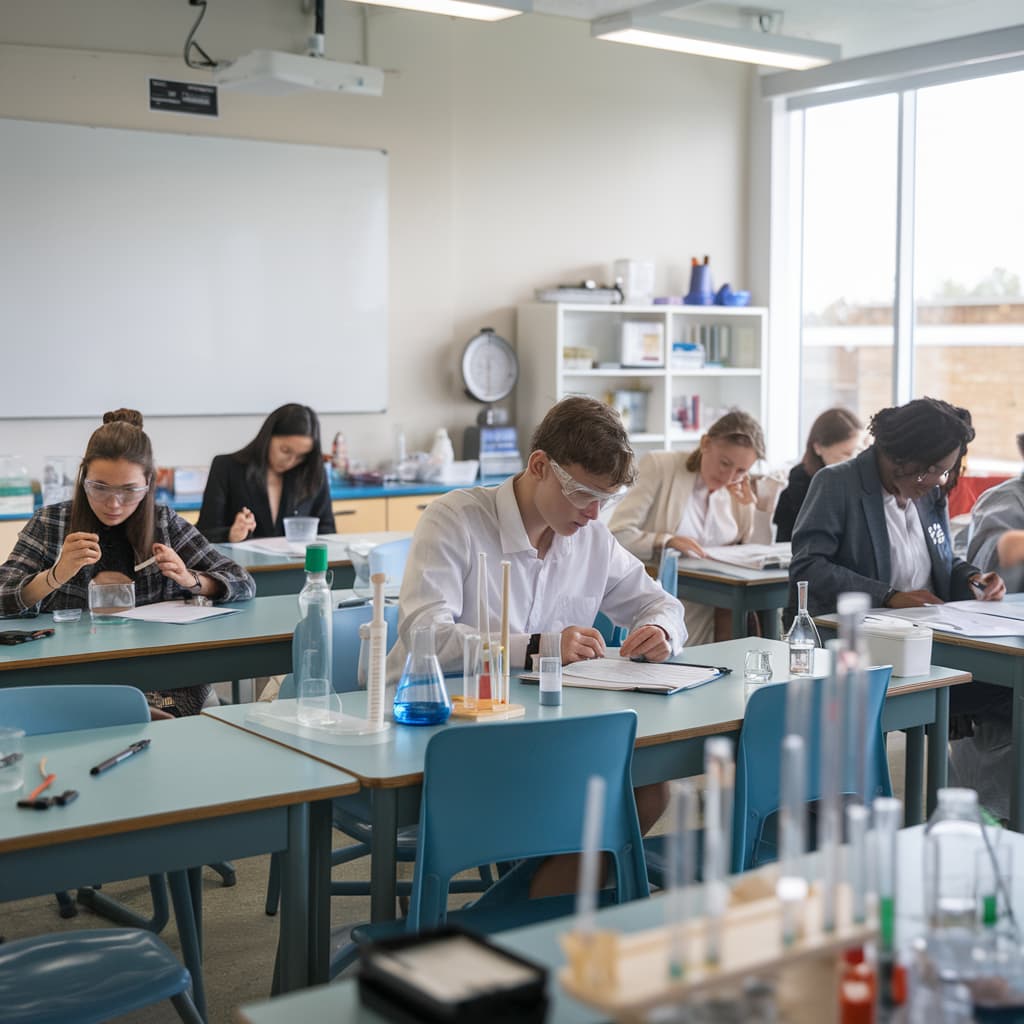
3 Top Chemistry IA Topics That Score High Marks
3 Top Chemistry IA Topics That Score High Marks Staring at a blank page while trying to choose your Chemistry IA topic? You're not alone. Every year, thousands of IB students struggle with this exact challenge. The truth is, picking the right chemistry IA topics can make the difference between an average grade and those […]

Key Takeaways
- Chemical kinetics investigations offer some of the most exciting opportunities in chemistry IAs! These experiments let you explore the fascinating world of reaction rates and mechanisms while scoring .
- Ready to dive into some fascinating acid-base chemistry? These investigations are perfect for showcasing your analytical skills while exploring real-world applications that IB examiners absolutely lov.
- Get ready to explore the fascinating world of thermodynamics – where heat, energy, and chemical reactions come together to create some of the most exciting chemistry IA opportunities!.
- [1] – https://www.pasco.com/products/lab-apparatus/thermodynamics?srsltid=AfmBOoqi8sfFZr-Shlq6MZdnAmfULavH5yEIQfliKB6NLzYA_cVi_Q55 [2] – https://tutorsplus.com/chemistry-ia-topic/ [3] R.
3 Top Chemistry IA Topics That Score High Marks
Staring at a blank page while trying to choose your Chemistry IA topic? You’re not alone. Every year, thousands of IB students struggle with this exact challenge. For more on this, see our guide on writing chemistry lab reports. (This guide has been for the 2025-26 academic year.)
The truth is, picking the right chemistry IA topics can make the difference between an average grade and those coveted high marks. While some experiments might seem interesting, they could lack the depth and complexity that IB examiners are looking for. Explore our detailed guide on Le Chatelier's principle for more tips.
That’s why we’ve identified three proven areas of study – kinetics, acid-base chemistry, and thermodynamics – that consistently help students score top marks. These topics offer the perfect balance of complexity, practical feasibility, and opportunities for in-depth analysis that examiners love to see. You may also find our resource on balancing redox reactions helpful.
If you're feeling uncertain about where to start with your Chemistry IA, you're not alone — it's one of the most common challenges IB Chemistry students face. An experienced IB Chemistry tutor can help you develop your topic, structure your argument, and avoid the mistakes that cost marks. Tell us what you need help with →
Kinetics and Catalysis Investigations
Chemical kinetics investigations offer some of the most exciting opportunities in chemistry IAs! These experiments let you explore the fascinating world of reaction rates and mechanisms while scoring high marks.
Why Kinetics Investigations Score Well
Kinetics investigations are particularly appealing to IB examiners because they combine mathematical analysis with practical chemistry. Research shows that students who can interpret both numerical data and pictorial representations demonstrate deeper understanding. The beauty of kinetics experiments lies in their ability to generate rich data that can be analyzed through multiple lenses – from graphs to mathematical models.
What makes these investigations especially powerful is their versatility. You can explore temperature effects, concentration changes, or catalyst impacts – all while collecting meaningful data that shows clear trends [2]. Plus, these experiments typically produce excellent visual data, perfect for those impressive graphs that examiners love!
Popular Kinetics Experiment Ideas
Here are some proven kinetics investigations that consistently yield excellent results:
- Temperature Impact Studies: Investigate how temperature affects reaction rates and calculate activation energy using the Arrhenius equation [3]
- Catalyst Effectiveness: Compare different transition metal catalysts in hydrogen peroxide decomposition [3]
- Concentration Effects: Study how varying reactant concentrations influence reaction rates using the iodine clock reaction
- Reaction Order Determination: Analyze the relationship between concentration and rate to determine reaction orders [5]
Tips for Designing Your Kinetics IA
Follow these essential guidelines to create a stellar kinetics investigation:
- Choose Your Variables Wisely: Keep one variable constant while changing another. For example, when studying temperature effects, maintain consistent concentrations [5].
- Plan Your Data Collection: Use appropriate time intervals for measurements. Remember, shorter intervals give more accurate rate values [5].
- Master Your Measurements: Whether you’re using a colorimeter, gas collection, or timing color changes, ensure your measurement technique is precise and repeatable [3].
The key to success lies in your experimental design. Studies show that problems requiring interpretation of diagrams or graphs are particularly effective at demonstrating understanding of chemical kinetics. When designing your investigation, focus on creating clear relationships between your variables that can be represented graphically.
Remember to consider practical aspects too! The best kinetics investigations often use common laboratory equipment while producing reliable, reproducible results. For instance, the decomposition of hydrogen peroxide with different catalysts offers excellent opportunities for data collection and analysis [3].
Pro Tip: Consider using spectrometry or colorimetry in your investigation – these techniques can provide particularly precise measurements for reaction rates [3]. Plus, they add an impressive technical element to your IA!
By following these guidelines and choosing from these proven topics, you’re setting yourself up for success. The key is to select an investigation that not only interests you but also provides ample opportunities for detailed analysis and discussion of the chemical principles involved.
Acid-Base Chemistry Topics
Ready to dive into some fascinating acid-base chemistry? These investigations are perfect for showcasing your analytical skills while exploring real-world applications that IB examiners absolutely love!
Benefits of Acid-Base Investigations
Chemistry IA Ideas & Pitfalls Guide
Master your IB Chemistry IA with expert topic ideas, feasibility tools, timelines, and scoring tips to plan, execute, and write a high-scoring investigation.
Download FreeAcid-base investigations are fantastic choices for your chemistry IA because they offer incredible versatility and practical applications. One of the biggest advantages is the ability to connect your research to everyday products and processes. From analyzing household vinegar to testing antacids, these experiments let you explore chemistry that’s literally sitting in your kitchen cabinet!
What makes acid-base topics particularly exciting is their perfect blend of quantitative and qualitative analysis. You’ll get to work with precise measurements while observing dramatic color changes and reactions. Plus, these investigations often produce clear, reproducible results – exactly what you need for a high-scoring IA!
Best Acid-Base Experiments to Consider
Here are some proven experiments that consistently impress examiners:
- Vinegar Analysis: Investigate how cooking temperature affects ethanoic acid concentration in vinegar using acid-base titration
- Antacid Effectiveness: Compare different brands of antacids in neutralizing simulated stomach acid
- Buffer Systems: Study how temperature affects the buffer action of sodium ethanoate-ethanoic acid systems
- Waters of Crystallization: Determine how storage conditions affect washing soda crystal purity
Experimental Highlight: The antacid investigation is particularly interesting because you can measure the time taken to neutralize a fixed volume of 1M hydrochloric acid, comparing various forms like tablets, powders, and liquids.
Common Pitfalls to Avoid in Acid-Base IAs
Don’t let these common mistakes trip up your investigation:
- Concentration vs. Strength Confusion
The biggest mistake students make is confusing acid strength with concentration. Remember: A strong acid completely ionizes in solution – this has nothing to do with how concentrated it is! - Solvent Considerations
Many students forget the crucial role of solvents. When working with aqueous solutions, remember that your strongest acid will be hydronium ion and strongest base will be hydroxide. - Measurement Precision
For reliable results, you need:
- Consistent titration techniques
- Proper endpoint identification
- Multiple trials for accuracy
Pro Tip: When designing your methodology, focus on factors that might influence your data’s reliability. Consider temperature control, concentration accuracy, and proper indicator selection. The best IAs show clear understanding of these methodological factors.
Remember that random errors can be reduced through repeated measurements, but systematic errors require careful experimental design to minimize. This attention to detail in your methodology section will really impress your examiners!
The beauty of acid-base investigations lies in their ability to demonstrate both your practical skills and theoretical understanding. By choosing one of these topics and avoiding common pitfalls, you’re setting yourself up for an excellent IA score!
Thermodynamics Studies
Get ready to explore the fascinating world of thermodynamics – where heat, energy, and chemical reactions come together to create some of the most exciting chemistry IA opportunities!
High-Scoring Thermodynamics Topics
Thermodynamics investigations offer incredible opportunities to showcase your experimental skills while exploring real-world applications. The most successful topics often involve calorimetry and enthalpy changes [3]. Here are some proven experiments that consistently impress examiners:
- Enthalpy of Combustion Studies: Compare the energy released by different alcohols or organic acids [3]
- Hydration Energy Analysis: Explore the relationship between hydration enthalpy and solution properties [3]
- Neutralization Heat Studies: Verify the enthalpy changes in acid-base reactions [3]
- Food Energy Content: Analyze caloric values in different cooking oils [3]
What makes these topics particularly exciting is their connection to everyday life. Imagine discovering why certain fuels are more efficient or understanding the science behind those instant heat packs in your first aid kit!
Equipment and Methodology Considerations
Success in thermodynamics experiments relies heavily on proper equipment selection and setup. Your essential toolkit should include:
Core Equipment:
- Calorimeters for precise heat measurements
- High-precision temperature sensors
- Heat engines for gas law demonstrations
- Thermal expansion apparatus
Pro Tip: When using calorimeters, consider using stainless steel temperature probes for more accurate readings. The precision of your measurements can make or break your investigation!
For optimal results, your experimental setup should focus on:
- Temperature Control: Maintain consistent environmental conditions
- Insulation Quality: Minimize heat loss to surroundings
- Measurement Timing: Record data at precise intervals
- Sample Preparation: Use standardized amounts and concentrations
Data Analysis Tips for Thermodynamics IAs
The magic of thermodynamics IAs lies in their data analysis! Here’s how to make your analysis shine:
Essential Analysis Methods:
- Use thermodynamic analysis to understand system performance
- Apply exergy analysis to identify energy losses
- Implement second law analysis for entropy generation studies
When analyzing your data, remember that thermodynamic analysis can lead to better understanding of overall system performance. Focus on:
- Data Processing:
- Calculate enthalpy changes accurately
- Determine activation energies
- Account for heat losses
- Error Analysis:
- Consider both systematic and random errors
- Calculate percentage uncertainties
- Evaluate the reliability of your results
Advanced Analysis Tips:
Process simulation packages can help improve thermodynamic efficiency. Consider using these tools to:
- Model your experimental system
- Predict theoretical values
- Compare experimental results with predictions
Remember to follow the twelve-step problem-solving process:
- State the problem clearly
- List given facts
- Identify what you need to find
- Define your system
- Write fundamental equations
- State your assumptions
- Show your calculations
- Present your solution
The beauty of thermodynamics investigations lies in their ability to combine theoretical understanding with practical applications. Whether you’re measuring the energy content of fuels or exploring the mysteries of entropy, these experiments offer endless possibilities for showcasing your chemistry expertise!
Important Note: When designing your methodology, focus on controlling variables that might influence your data’s reliability. Consider temperature fluctuations, concentration accuracy, and proper calibration of instruments.
Meeting all the criteria while keeping your Chemistry IA focused and original is a lot to manage on your own. Many of our students come to us at exactly this stage — they understand what's required but need expert guidance to pull it all together. Get matched with a Chemistry tutor →
Conclusion
Chemistry IA’s success relies heavily on selecting the right topic that balances complexity with practical feasibility. The three areas discussed – kinetics, acid-base chemistry, and thermodynamics – stand out as excellent choices for students aiming for top marks. Learn more in our guide on mastering organic chemistry.
Kinetics investigations offer rich opportunities for mathematical analysis and visual data representation. Acid-base topics connect theoretical concepts with everyday applications while providing clear, reproducible results. Thermodynamics studies demonstrate deep understanding through practical experiments and comprehensive data analysis.
Remember that experimental design makes a crucial difference in your IA’s success. Careful attention to variables, precise measurements, and thorough error analysis will set your work apart. Most importantly, choose a topic that genuinely interests you – this enthusiasm will shine through in your writing and analysis.
These proven topics, combined with proper experimental techniques and detailed analysis, create the perfect foundation for a high-scoring Chemistry IA. Start your planning early, focus on quality data collection, and maintain meticulous documentation throughout your investigation.
References
[1] – https://www.pasco.com/products/lab-apparatus/thermodynamics?srsltid=AfmBOoqi8sfFZr-Shlq6MZdnAmfULavH5yEIQfliKB6NLzYA_cVi_Q55
[2] – https://tutorsplus.com/chemistry-ia-topic/
[3] – https://nailib.com/blog/chemistry-ia-ideas
[4] – https://sites.lps.org/sputnam/LHS_IB/IBChemistry/ErrorUncertainties_IA.html
[5] – https://www.savemyexams.com/dp/chemistry_sl/ib/16/revision-notes/6-chemical-kinetics/6-1-chemical-kinetics/6-1-5-rate-experiments/
[6] – https://chemistrytutor.me/ib-hl-chemistry-ia-ideas-topics/
[7] – https://drgchemistry.weebly.com/uploads/2/4/8/9/24894932/chemistry_ia_ideas.pdf
[8] – https://www.youtube.com/watch?v=UOtD8OJvebY
[9] – https://www.vernier.com/til/4085?srsltid=AfmBOooW2TXasIPzh54LZp12J6m18jRxRXjHSIE1dDXN4FCaZQPiptOk
[10] – https://www.sciencedirect.com/topics/chemistry/thermodynamic-analysis
[11] – https://signalvnoise.com/posts/3489-what-does-mechanical-engineering-have-to-do-with-data-science
[12] – https://www.ahschools.us/cms/lib/MN01909485/Centricity/Domain/4810/Chem 2andIB Chem/IA Student Guide.pdf
Get Expert Help With Your Chemistry IA
Our Chemistry tutors have guided hundreds of IB students through the Chemistry IA process — from topic selection to final submission. Whether you need help finding your angle, strengthening your analysis, or polishing your draft, we'll match you with a tutor who knows exactly what examiners are looking for. Find your tutor →
Frequently Asked Questions
What makes a good Chemistry IA topic?
A good Chemistry IA topic should be personally interesting, feasible with school lab equipment, allow for quantitative data collection, and have a clear independent and dependent variable. Avoid overly common topics and choose something that lets you demonstrate genuine scientific inquiry.
How long should an IB Chemistry IA be?
The IB Chemistry IA should be approximately 6-12 pages, with a recommended word count of around 2,000 words (excluding tables, graphs, and references). Focus on quality analysis rather than length.
What is the most common mistake in Chemistry IAs?
The most common mistake is choosing a topic that is too broad or too simple. Students also frequently lose marks for insufficient error analysis, lack of personal engagement, and failing to connect their findings to the broader scientific context.
Can I use an AI solver for my Chemistry IA?
AI solvers can be helpful for checking calculations and understanding concepts during your research phase, but your IA must reflect your own original work and thinking. Always verify AI outputs and cite any tools you used appropriately.