How to Ace Your Global Politics IA
About the Author: Owain J. This week's blog post on the IB Global Politics IA is written by our fantastic tutor, Owain. He's going to help you ace your Global Politics IA, of course, if you're still stuck, don't worry! We have experienced tutors ready and waiting to help you succeed with your Global Politics IA. […]
According to the IB, the Political Engagement Activity (PEA), or IA, provides students with "an opportunity to explore the central unifying theme of the course—people, power and politics—in practice a. This comprehensive guide covers everything you need to know about your Internal Assessment, from choosing a viable topic to structuring your analysis for maximum marks.
Key Takeaways
- According to the IB, the Political Engagement Activity (PEA), or IA, provides students with "an opportunity to explore the central unifying theme of the course—people, power and politics—in practice a.
- The IA is your opportunity to be an experiential learner; you will learn about an issue in global politics by participating and reflecting on your chosen political issue.
- Your Global Politics IA is an opportunity to develop real understanding of political issues through direct engagement and rigorous research.
This week's blog post on the IB Global Politics IA is written by our fantastic tutor, Owain. He's going to help you ace your Global Politics IA. If you're stuck, don't worry—we have experienced tutors ready to help you succeed with your Global Politics IA.
Introduction
According to the IB, the Political Engagement Activity (PEA), or IA, provides students with "an opportunity to explore the central unifying theme of the course—people, power and politics—in practice and outside the classroom." Therefore, the IA can be seen as an opportunity to have a meaningful experience of politics in the real world. The IA is also worth a significant chunk of your final grade. Thus, it can help with your grade outside of a pressurized exam situation and it is important to take it seriously. For more on this, see our guide on creating your IA timeline.
Uncertain whether your proposed engagement truly meets IB criteria and will yield strong marks? Many students struggle deciding whether their engagement idea is substantive enough, how to connect it to course concepts, or whether they're developing meaningful political understanding. Expert Global Politics guidance helps you select engagements that satisfy both IB requirements and genuine learning goals. Talk to a Global Politics tutor about your IA engagement and ensure you're building the right foundation for a high-scoring report.
In this blog post I'll be covering some of the main aspects of the IA:
- What is it and why does it matter?
- How do I get started and write my Global Politics IA?
What is the IA/PEA and why does it matter?
The IA is your opportunity to be an experiential learner; you will learn about an issue in global politics by participating and reflecting on your chosen political issue. This is an experience that is shaped by you and cannot be replicated in your classroom. As previously mentioned, a large amount of your grade depends on this; 25% of your grade if you are an SL student and 20% if you are an HL student.
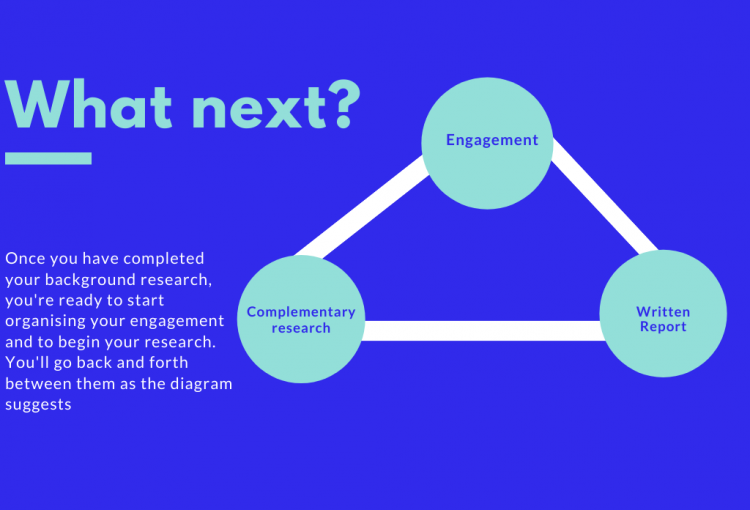
The PEA is broken into three sections; the engagement, the complementary research and the written report, which should be no more than 2,000 words.
The Engagement section
The engagement is the bedrock of your IA. This is what allows you to explore, experience and reflect on a political issue. When selecting an engagement, it should help you learn about a political issue through your experience. Ideally, it should also be something you have a genuine interest in. Ultimately, when choosing your engagement, you need to answer yes to the following questions:. You may also find our resource on write powerful test reflection questions helpful.
- Does the engagement allow me to experience the dynamics of real-world politics and do so in a participatory way?
- Do the political issues being focused on affect a community or a society in which I have some stake and experience?
- Does the engagement involve contact with others who are also interested, or have a stake in, the political issue?
What is an engagement?
Here is one example of some engagements and the political issue that they align with:
| Engagement | Political Issue |
|---|---|
| Attendance at the full meeting of a city council, followed by interviews with two of its female councillors | How does the nature of democracy impact upon representation of women in politics? |
| Campaigning with a city councillor in support of a female candidate running for the national parliament | |
| Attendance at a conference to hear a speech by a female member of parliament opposed to quotas for women in politics | |
| Participation in a group discussion with a female government minister |
YOUR ENGAGEMENT SHOULD NOT CONSIST SOLELY OF INTERVIEWS AND MUST INVOLVE ACTIVE ENGAGEMENT AND PARTICIPATION ON YOUR PART
Complementary Research
In addition to your engagement, you must also do complementary research for your IA. This helps to give some background context for which your engagement took place. It also helps to make links to some of the course's key concepts, theories, and ideas. The perspectives you gain through your engagement are partial and limited. Research is therefore required to establish which other perspectives on the political issue and organisation(s) with which you have been engaging are possible, as well as what the strengths and weaknesses of the various perspectives are. Ultimately, when doing this part of your IA, you should be asking yourself: what else do I need to know and understand to be able to write a good, evaluative analysis of my selected political issue? Learn more in our guide on write an IB internal assessment a.
Written Report
This is what you actually submit to the IB for assessment. It is useful to formulate it into a question, that you will attempt to answer through your experiences and research. Your report must be no more than 2,000 words in length (but anything substantially below this is unlikely to meet the criteria for success). You should be careful that your report does not simply describe, at length, what you did during your engagement. Instead, the key aspect of the engagement in the report should be what it taught you about your selected political issue. You must synthesise your insights and evaluate the political issue from multiple perspectives. There is no specific structure required for the IA, but it must have a clear structure and be well-presented.
How do I start AND write my Global Politics IA?
Tips to be successful in your IA. The first step is to consider what parts of the course you are most interested in. Gender equality? Human rights? Sustainable development? This will give you a start on finding a political issue linked to some of the key concepts, theories and ideas from the course.
Once you have some ideas, then you can start doing background research. Before you can start, you should be able to answer the following questions:
- What is your proposed political issue?
- Why are you interested in this issue?
- What is your proposed research question?
- How do you propose to engage with the political issue? Please provide a brief explanation.
- What complementary research sources are available?
- How does this link to the global politics course?
- Does the engagement allow me to experience the dynamics of real-world politics and do so in a participatory way?
- Do the political issues focused upon affect a community or a society in which I have some stake and experience?
- Does the engagement involve contact with others who are also interested, or have a stake in, the political issue?
Other things to remember:
- You must do more than just interviews. This is an experiential learning opportunity, and interviewing people relevant to your issue only addresses part of this. Successful IAs do more than just interview—they involve actual participation in a political engagement. Begin working on this in plenty of time. Organizations and individuals can be busy. Sometimes they can be difficult to get hold of. Getting started allows you to work on a plan B if your initial ideas do not come to fruition.
- Make sure you are using reputable sources during your IA. What does this mean? It means you are referring to articles, books, documentaries, reports from universities, NGOs, IGOs and news organizations. They are staffed with professionals who have the academic and field experience to know what they are talking about.
- Remember to always refer back to the same key idea; what did you learn about the political issue from your engagement? Less successful IAs simply describe what the student did, rather than explaining how it helped understand a political issue.
- Enjoy the experience! Remember that this is your opportunity to learn about global politics outside of the confines of the classroom.
How do I Structure my IA?
Your opening paragraphs should set the scene about what you did and how it links to the course and should include the following:
- Identify your political issue
- Explain why this engagement and political issue are of interest to you. Explain the link between the engagement and political issue on one hand and course content on the other hand
- Make it clear what you did and why it is relevant for your chosen political issue
Once you have outlined what you did, it is time to begin analyzing your political issue. The majority of your IA should be dedicated to doing the following:
- Analyzing the political issue using key concepts and ideas from the course
- Merging your experiences with your research and what other people think about this issue
- Explaining why your experiences helped you understand this issue
- Looking at different opinions on the issue and explaining how accurate they are
- Concluding the issue. What is your opinion and why have you come to it?
Drowning in political theory while trying to connect your engagement to course concepts? Balancing theoretical analysis with lived experience is exactly where many Global Politics IAs lose marks—students either describe their engagement without analysing it through political concepts, or dive into theory without grounding it in their actual learning. Expert Global Politics instruction shows you how to integrate experience and theory seamlessly. Get Global Politics IA support from an experienced tutor and develop the analytical writing that earns top markbands. To strengthen your analysis further, see how to finalize and polish.
Master Your Global Politics IA With Expert Support
Your Global Politics IA is an opportunity to develop real understanding of political issues through direct engagement and rigorous research. Success requires selecting an engagement that provides genuine experiential learning, conducting thorough complementary research across multiple perspectives, and writing analysis that synthesises your learning into sophisticated political argument. Expert Global Politics guidance helps you navigate engagement selection, develop strong research practices, and craft analytical writing that addresses the markbands directly. Connect with a Global Politics IA specialist today and transform your engagement and research into a top-scoring report.
Conclusion
The Global Politics IA is your opportunity to learn about a political issue of your choosing out in the real world. It is also a chance to gain valuable points that contribute to your final grade. Avoid any common pitfalls by being organized, choosing a clear political issue and making sure you conduct a variety of engagements. This will enable you to further your passion for global politics and get an excellent grade, giving you two reasons to be happy! Explore our detailed guide on women in science untold stories that changed for more tips.
With thanks to:
- UWC Costa Rica
- The IBDP Global Politics Guide
About the Author: Owain J.
AN EXPERIENCED TEACHER OF IBDP HISTORY (HL AMERICAS) AND GLOBAL POLITICS. WHETHER IT'S EXAM TECHNIQUE, KEY COURSE MATERIAL, OR INTERNALLY-ASSESSED WORK, HE WOULD BE HAPPY TO HELP YOU WORK TOWARDS YOUR GOAL OF IMPROVING YOUR IBDP GRADES!
Frequently Asked Questions
What makes a strong Global Politics Internal Assessment topic?
An excellent Global Politics IA topic allows you to apply political concepts meaningfully to real-world events or situations, demonstrating both subject knowledge and critical thinking. Choose a topic that genuinely interests you—authenticity matters because you'll be conducting research and writing extensively on this subject. Your topic should be neither too broad (preventing adequate depth) nor too narrow (limiting available research materials). Ideal topics allow you to explore political concepts like power, sovereignty, justice, or representation through specific case studies, current events, or historical situations. Ensure your topic isn't purely descriptive; it should allow you to analyse and evaluate different perspectives on a political issue rather than simply documenting events.
How should I structure my Global Politics IA research?
Begin by developing a clear research question that guides your investigation—this question should be analytical rather than descriptive. Conduct systematic research using academic sources: peer-reviewed journals, reputable news organisations, government publications, and books by established political analysts. Avoid relying exclusively on Wikipedia or general websites lacking credibility. Organise your research by key concepts or perspectives relevant to your question: what do different political theorists or stakeholders say about your issue? As you research, take detailed notes including source citations, because your IA must demonstrate you've engaged with multiple sources and perspectives. A strong IA typically cites 15-20 sources minimum, providing evidence of thorough research.
What analytical frameworks strengthen Global Politics IA arguments?
Apply relevant political concepts and theories to your analysis rather than simply describing political events. Consider power dynamics: who holds power in your situation and how is it exercised? Examine different perspectives: how do various stakeholders view the political issue, and why do these differences exist? Use appropriate political vocabulary: terms like realism, liberalism, sovereignty, hegemony, or justice depending on your topic. Your IA should demonstrate you understand major political theories and can apply them meaningfully to your chosen topic. The strongest IAs don't just use political concepts superficially; they explore tensions between different theoretical perspectives on your issue.
How do I ensure my Global Politics IA meets assessment criteria?
Review the IA markband criteria before finalising your topic and throughout your writing process. The criterion typically emphasises: knowledge of global political concepts, understanding of the specific situation or case study, analysis of different perspectives, evaluation of political claims and arguments, and use of evidence supporting your analysis. As you draft your IA, ensure you're not just explaining what happened but analysing why it happened and evaluating competing explanations. Include counterarguments to your position and address why you find your argument more convincing despite legitimate alternative perspectives. This balanced approach demonstrates sophisticated political thinking valued highly in markbands.
What common mistakes should I avoid in my Global Politics IA?
Avoid purely descriptive writing that explains political events without analysing underlying causes or evaluating different interpretations. Don't assume all online sources are equally credible—biased blogs or advocacy websites shouldn't form your primary research foundation. Avoid ignoring counterarguments; acknowledging and addressing different perspectives strengthens your analysis rather than weakening it. Don't rely on single-source evidence for major claims; triangulate findings across multiple credible sources. Finally, avoid allowing personal bias to override objective analysis—present multiple perspectives fairly even if you ultimately disagree with some.
How can I ensure my Global Politics IA achieves the highest markband?
Excellence in Global Politics IA requires deep engagement with political concepts, thorough research demonstrating multiple perspectives, and analytical writing that moves beyond description. Begin researching early, allowing time for careful analysis rather than last-minute writing. Consult your teacher regularly, seeking feedback on your research direction and analytical approach. Revise your writing multiple times, ensuring each paragraph advances analytical argument rather than padding with unnecessary information. Explore our find a tutor service for expert guidance helping you develop sophisticated political analysis and achieve top markband scores.