IB Chemistry Tutor: How to Find Expert Help for HL and SL in 2026
The best IB Chemistry tutor is someone who has taught or examined the IB Chemistry syllabus at HL or SL level, understands the IA marking criteria inside out, a...
The best IB Chemistry tutor is someone who has taught or examined the IB Chemistry syllabus at HL or SL level, understands the IA marking criteria inside out, and can explain organic chemistry mechanisms without making your student's eyes glaze over. Finding that person is the hard part. In 2026, online tutoring has made the search easier because you are no longer limited to whoever lives nearby, but the quality range is enormous.
This guide covers what makes a great IB Chemistry tutor, what qualifications to look for, how much tutoring costs, and how to tell whether it is actually working.
Key Takeaways
- Look for a tutor with IB examining or teaching experience, not just a chemistry degree. The IB syllabus has specific assessment criteria that general chemistry tutors may not know.
- HL Chemistry is one of the most demanding IB subjects. Students typically need help with organic chemistry, energetics, and the IA, not just exam revision.
- Expect to pay $50-$130/hr for a qualified IB Chemistry tutor online. In-person rates run 20-30% higher due to travel.
- Start tutoring early in the course (ideally by Topic 5 or 6), not two weeks before exams. Chemistry builds cumulatively and last-minute cramming rarely works.
Need help now rather than later? Our Client Success Manager can match you with an IB Chemistry specialist in 24 hours.
Why IB Chemistry Students Need a Tutor
IB Chemistry is one of the subjects where the gap between "understanding the concept" and "scoring well on IB assessments" is widest. Your student might grasp the theory but struggle with the way IB frames exam questions, or they might be fine on Paper 1 multiple choice but fall apart on Paper 2 extended response.
The most common pain points parents report:
- Organic chemistry (Topics 10 and 20): Reaction mechanisms, functional group transformations, and stereochemistry overwhelm many students. These topics require a different kind of thinking than the earlier physical chemistry content.
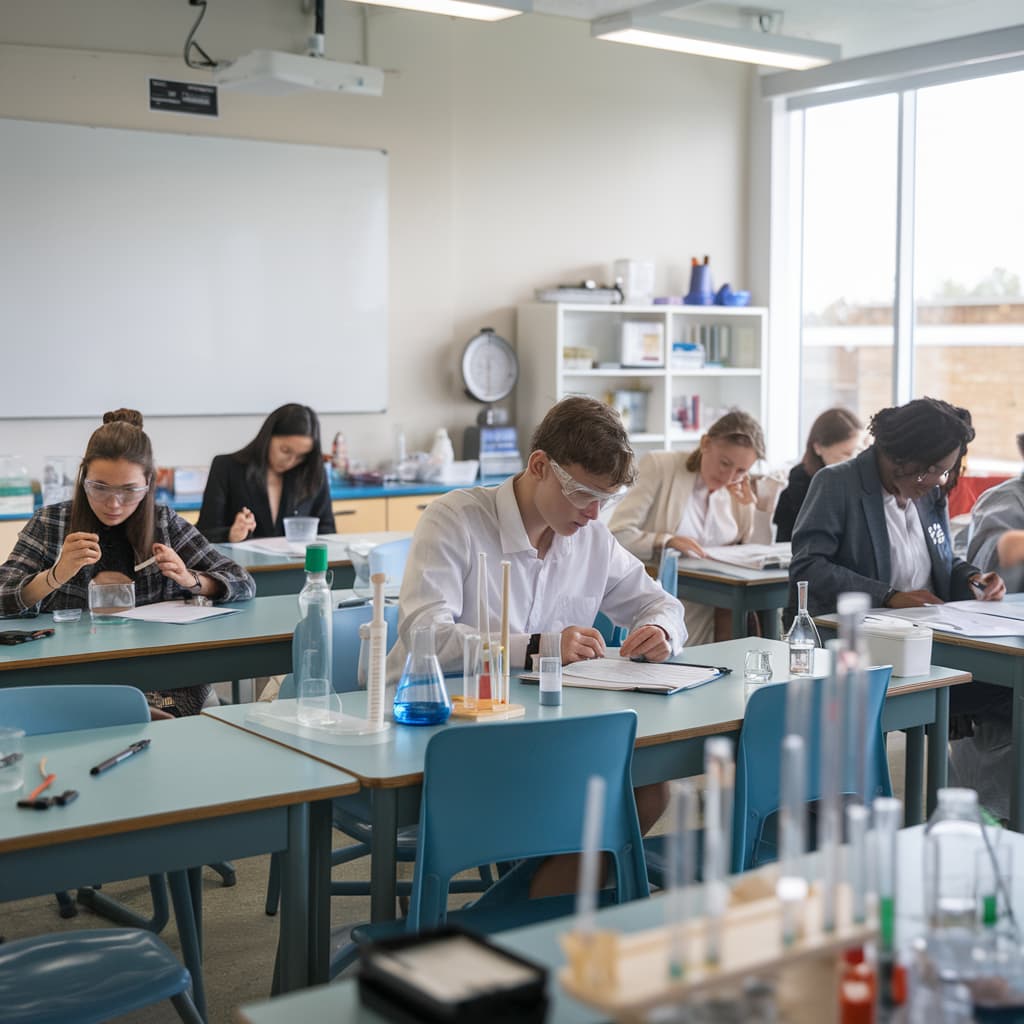
- The Internal Assessment: Worth 20% of the final grade, the Chemistry IA has very specific marking criteria that school teachers often do not have time to coach individually. A tutor who knows the IA rubric can be the difference between a 4 and a 6 on that component alone. For detailed guidance, see our step-by-step science IA guide.
- Energetics and equilibrium: These topics are abstract and mathematical. Students who are strong in maths often handle them fine; students who are not need targeted support.
- Data-based questions (Paper 3 Section A): These require students to analyse unfamiliar data, which is a skill that improves dramatically with practice but is rarely drilled enough in class.
What Makes a Great IB Chemistry Tutor
IB-Specific Experience
A chemistry PhD does not automatically make someone a good IB Chemistry tutor. The IB syllabus has its own structure, its own command terms ("deduce" vs "explain" vs "suggest"), and its own marking schemes. You want someone who has either taught IB Chemistry in a school, examined for the IBO, or tutored IB students for at least two years. Ask directly: "How many IB Chemistry students have you tutored, and at what levels?"
IA Coaching Ability
The IA is where a good tutor earns their fee. They should be able to help your student choose a viable research question, design a method that hits the "personal engagement" and "exploration" criteria, and review drafts with specific feedback tied to the IB rubric. If a tutor cannot walk you through the five IA criteria from memory, they are not specialised enough.
Exam Technique, Not Just Content Knowledge
IB Chemistry exams reward specific skills: time allocation across papers, command term interpretation, showing working for calculation marks, and knowing which formulae are in the data booklet vs which must be memorised. A great tutor drills these skills alongside content.
Adaptability to HL vs SL
HL Chemistry covers significantly more content (Topics 12-21) and requires deeper quantitative analysis. A tutor who only teaches SL may not be equipped for HL. Confirm that your tutor has experience at your student's specific level.
Feeling overwhelmed by the search? We vet every tutor for IB-specific experience before matching. Tell us your student's level and subjects, and we will find the right fit.
Online vs In-Person IB Chemistry Tutoring
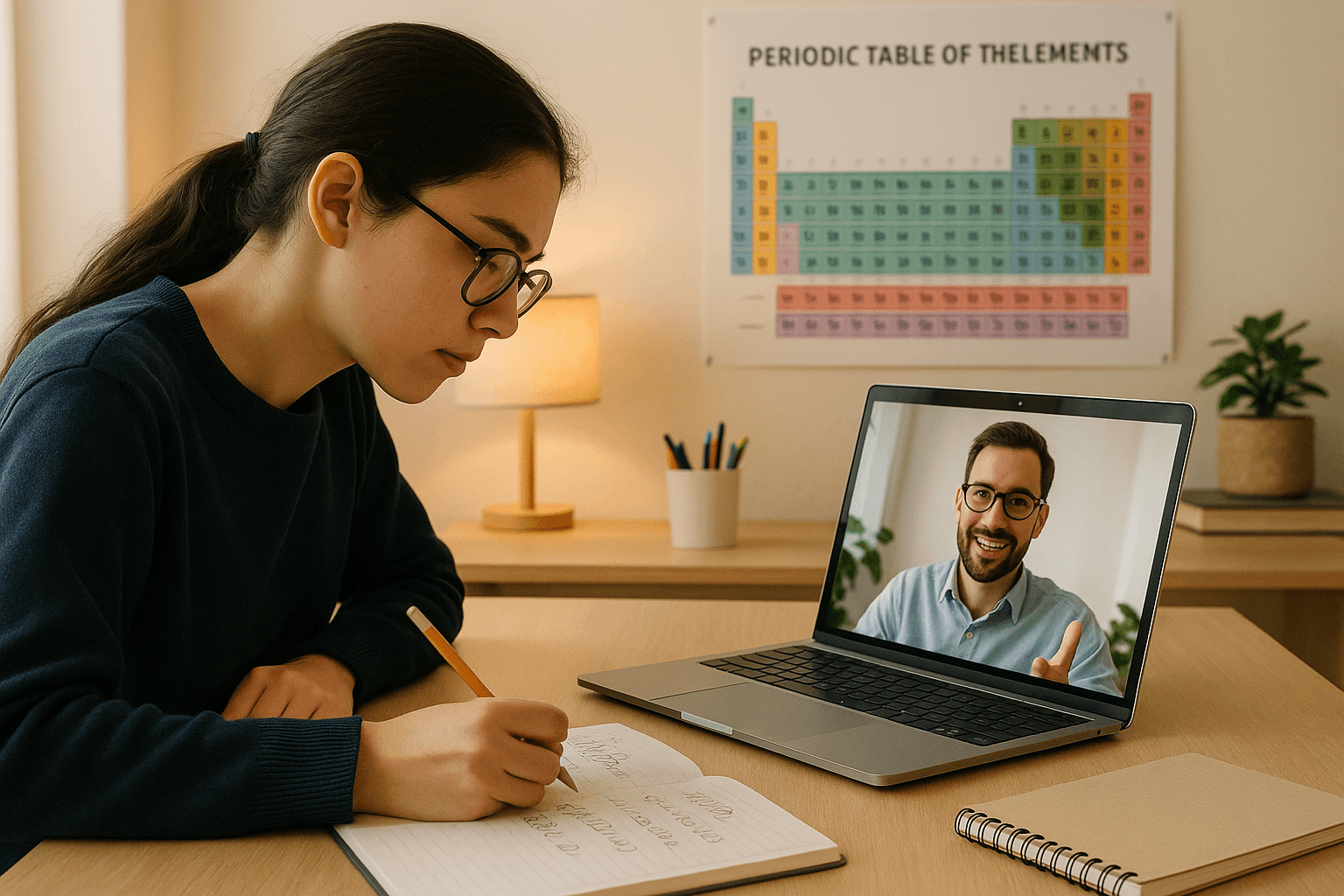
Online tutoring works well for IB Chemistry, with one caveat: the tutor must use a shared whiteboard or document for working through calculations and mechanisms. Chemistry involves a lot of drawing (structures, mechanisms, graphs) and your student needs to see the tutor's working in real time.
Online advantages: Access to IB Chemistry specialists globally (there are not many in any single city), lower cost, session recordings for revision, flexible scheduling around your student's timetable.
In-person advantages: Easier for hands-on IA support if your student is in the experimental design phase, built-in accountability for students who struggle with screen focus.
For most IB Chemistry students, online is the better choice because the pool of qualified IB Chemistry tutors in any given city is small. Going online means you pick the best tutor for the subject rather than the closest one geographically. For a full comparison, see our guide on online vs in-person tutoring.
How Much Does IB Chemistry Tutoring Cost?
Pricing depends on the tutor's qualifications and format:
- University student or recent graduate: $30-$50/hr. Fine for SL content review, but unlikely to have IA examining experience.
- Experienced IB teacher (3+ years): $60-$100/hr. Can coach both content and exam technique. This is the sweet spot for most students.
- IB examiner or senior teacher: $90-$130/hr. Ideal for HL students targeting a 6 or 7, or students who need intensive IA support.
- In-person premium: Add 20-30% to the above ranges for in-person sessions due to travel time.
For a full breakdown of tutoring rates across all IB subjects, see our guide on how much an IB tutor costs in 2026.
How to Tell If Tutoring Is Working
Give it four to six sessions before judging. The signs that tutoring is effective:
- Your student can explain concepts back to you in their own words (not just repeat what the tutor said)
- Practice paper scores are improving, with clear progress on previously weak topics
- Your student is more confident tackling unfamiliar questions independently
- The tutor provides specific feedback after each session, not vague reassurances
If after six sessions your student's scores are flat and they cannot articulate what they have learned, the tutor is not the right fit. A good tutor will also be honest about this; they will tell you if they think the match is not working.
How to Get Started
The process is straightforward. Identify which topics or assessments your student needs help with (the IA, specific syllabus topics, exam technique, or all three). Then look for a tutor with IB Chemistry teaching or examining experience at your student's level. Do a trial session before committing to a package. Learn more about how our matching process works.
Frequently Asked Questions
How many hours of IB Chemistry tutoring does my student need?
Most students benefit from one session per week throughout the academic year, with an increase to two sessions per week in the month before exams. For IA support, plan for 4-6 dedicated sessions during the IA drafting period. Total hours across the course typically range from 30-50 for HL and 20-35 for SL.
Can a tutor help with the IB Chemistry IA specifically?
Yes, and this is one of the most valuable things an IB Chemistry tutor can do. A tutor with examining experience can help your student choose a research question, refine their experimental design, and review drafts against the five IA criteria. The IA is worth 20% of the final grade, so targeted support here has a disproportionate impact on the overall result.
Is IB Chemistry HL significantly harder than SL?
Yes. HL adds 10 additional topics including advanced organic chemistry, spectroscopy, and more complex energetics. The exam papers are longer and the questions require deeper analysis. Students who are comfortable at SL often find the jump to HL material challenging, particularly in organic mechanisms and quantitative equilibrium problems.
When should my student start IB Chemistry tutoring?
The earlier the better, but the most common starting point is when students reach Topic 5 (Energetics) or Topic 10 (Organic Chemistry), as these are where most students first struggle. Starting two weeks before exams is too late for Chemistry because the subject builds cumulatively. If your student is already behind, start immediately.
Find Your IB Chemistry Tutor in 24 Hours
Get matched with a certified IB examiner or teacher tailored to your subject, level, and schedule. 4.9★ rated by 500+ students. Money-back guarantee.